

There’s a version of this conversation that goes badly, and most of us have sat through it.
On one side: history as a highlight reel. Great men, clean marble, nothing that hurts. On the other: history as an indictment. A list of failures, delivered to nine-year-olds who don’t yet have anywhere to put it.
Neither one produces what parents actually want, which is a kid who cares — who feels some ownership of the place they live and some responsibility for what happens to it next.
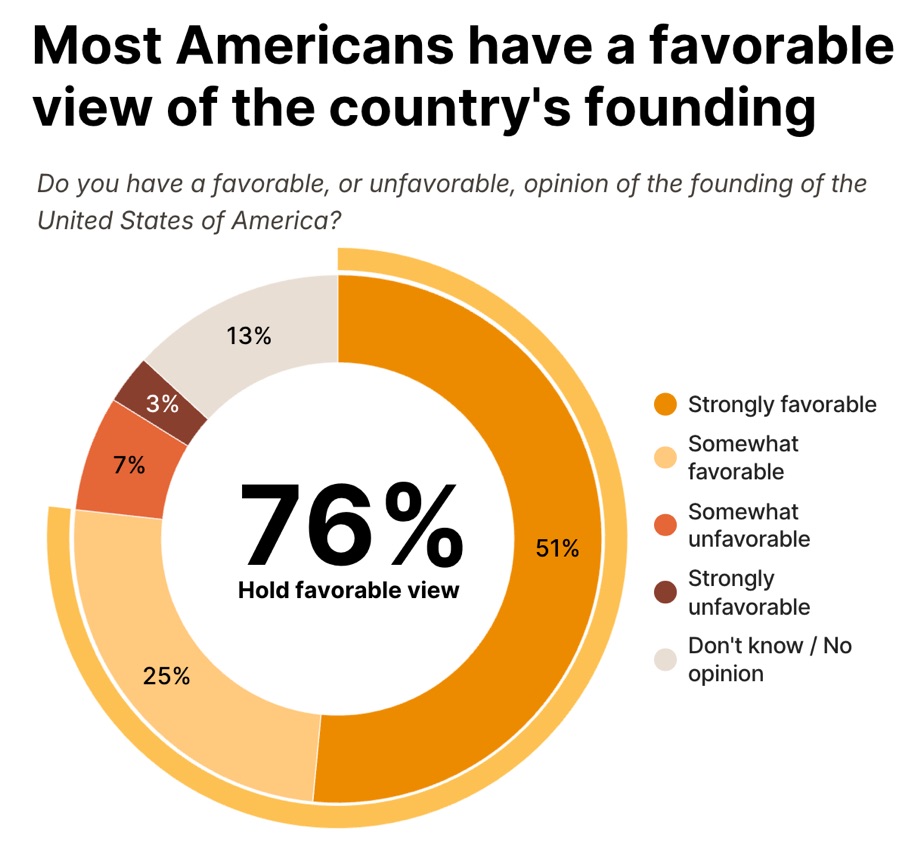
Here’s the case for the third thing, and how to teach it without flinching.
Attachment comes before evaluation
You can’t critique something you were never attached to. You can only dismiss it.
This is true of families, of towns, of institutions, and it’s true of countries. The people who have improved America most were not the ones who felt nothing for it. Frederick Douglass’s Fourth of July speech is the sharpest indictment of American hypocrisy ever delivered — and it’s built entirely on the premise that the Declaration’s promises were real and were his. He wasn’t rejecting the founding. He was holding it to its own word.
That move — you said all men are created equal; act like it — is only available to someone who takes the claim seriously in the first place.
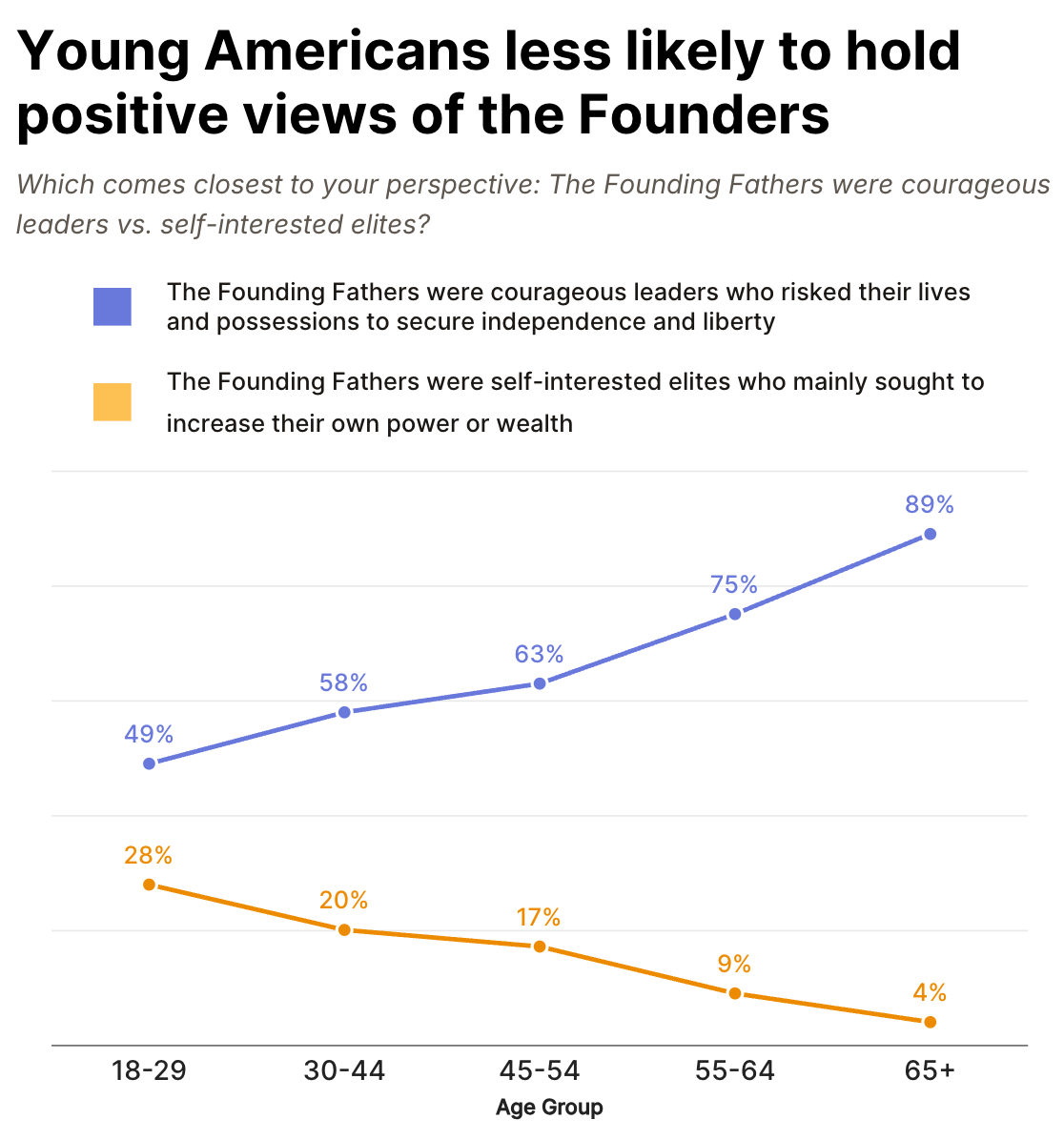
So the order matters. Give a child something to love, and criticism becomes a form of care. Skip it, and criticism is just contempt with footnotes.
Honest doesn’t mean grim
Kids can hold two things at once far better than adults expect. The frame that works is not “America was good” or “America was bad.” It’s:
These were real people who did something extraordinary and something shameful, sometimes in the same room, on the same day.
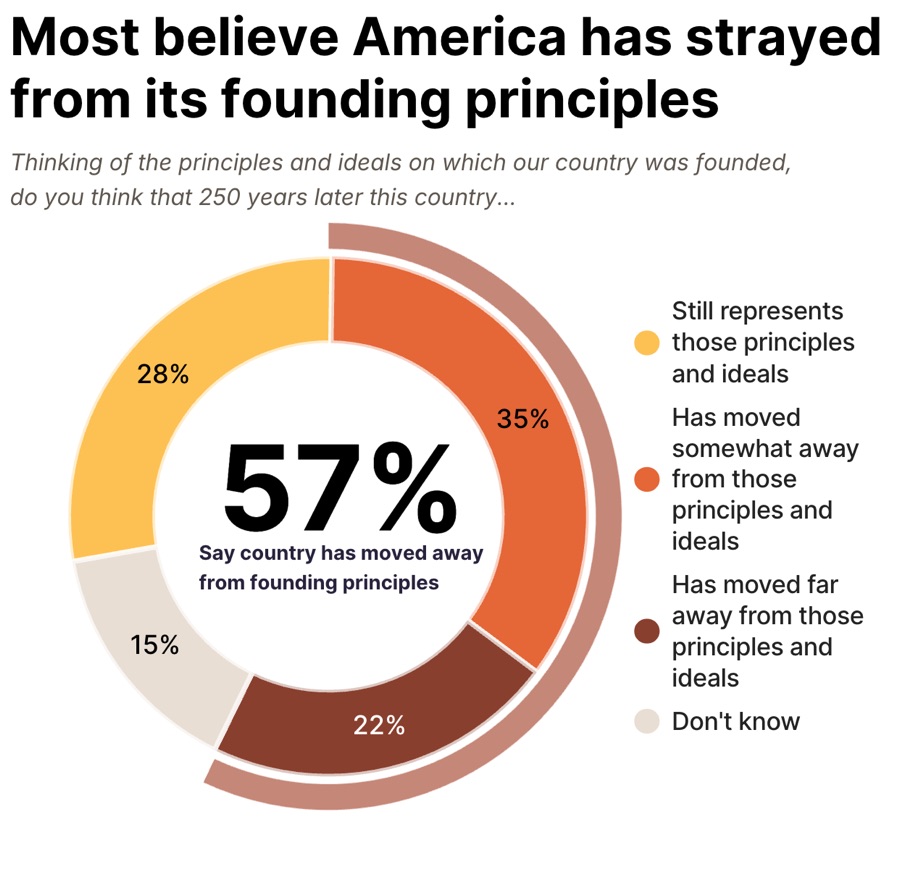
Jefferson wrote that all men are created equal. Jefferson enslaved people. Both sentences are true, and a ten-year-old can carry both. What they can’t carry is a version where one of those sentences is hidden — because when they find out later (and they will), the discovery doesn’t just change their view of Jefferson. It changes their view of you.
Trust is the actual asset here. Say the hard thing first, in a form the kid’s age can hold, and you keep the right to be believed about everything else.
The part almost nobody teaches: it might not have worked
The single most useful thing you can give a child about 1776 is contingency.
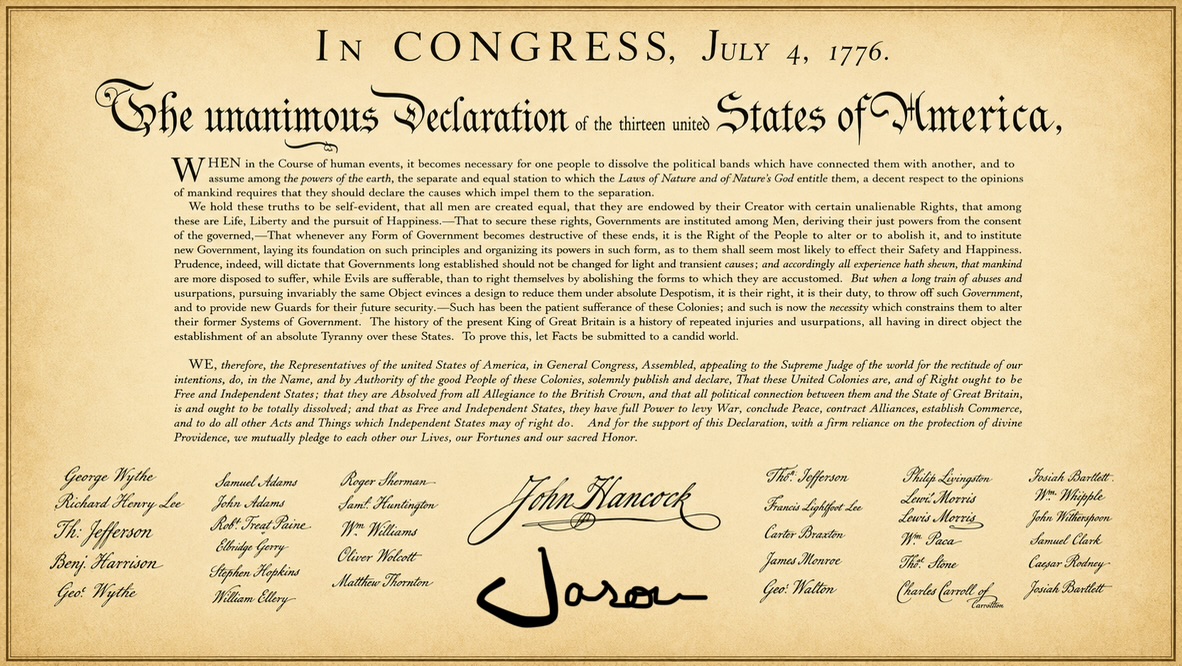
School tends to teach the Revolution as a completed fact — of course they declared independence, of course they won, of course there’s a country. But in the summer of 1776, none of that was obvious.
The vote was a near thing. On July 1, South Carolina voted no. Delaware was deadlocked until Caesar Rodney rode overnight through a storm to break the tie. Pennsylvania only swung to yes because two of its delegates — John Dickinson and Robert Morris — deliberately stayed away from the chamber rather than vote for it. New York abstained entirely and didn’t sign on until nine days later. Dickinson never signed at all.
And signing was treason. Under British law the penalty for that was death.
When a kid understands that it could have gone the other way, two things happen. The people stop being statues and become people who were scared and did it anyway — which is the only kind of courage worth teaching. And the country stops being weather and becomes a choice, which means it’s still a choice, which means it’s theirs to keep making.
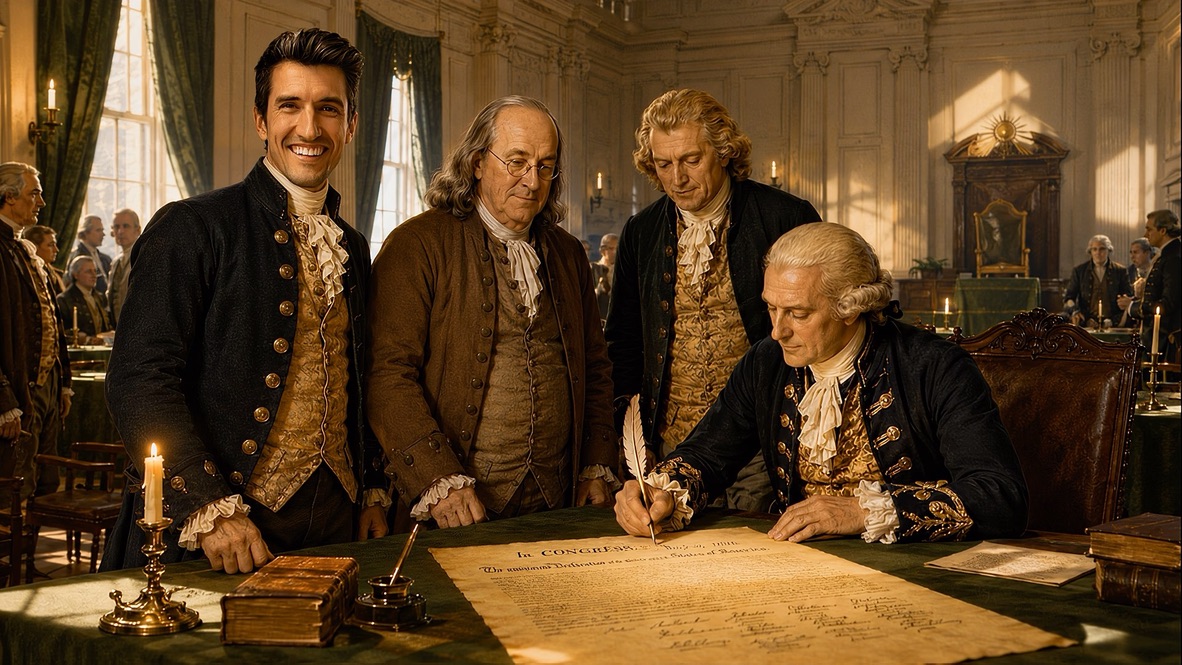
That is patriotism you don’t have to apologize for. Not “we’re the best,” but “this was hard, it was built on purpose, and it’s now partly your job.”
Four things that actually work at the kitchen table
- Use primary sources early. Read a paragraph of the actual Declaration out loud — not a summary. Kids are far more capable with hard text than we assume, and there’s no substitute for hearing the real words.
- Ask what they would have done. “You’re 33, you have a family, and signing this piece of paper is treason. Do you sign?” A kid who has answered that question owns the story in a way no worksheet produces.
- Include the argument. The founders disagreed with each other constantly. Teaching the disagreement teaches that debate is native to the thing, not a sign that it’s broken.
- Go local. Whose name is on the road you drive to church? What happened in your state in 1776? Abstraction is the enemy of attachment.
Why we built 1776 this way
I spent years in Hollywood visual effects production — a VFX production manager and producer on films like Avatar and The Avengers — building worlds that felt real enough to walk into. Then I had kids, and watched history bounce off them the way it bounces off most kids: as text, at a distance, about strangers.
So we built 1776 to close that distance. Kids walk into Independence Hall. They meet the delegates. They work through the wording of the Declaration alongside Jefferson — including the parts that got cut and the compromises that were made — and then they sign it themselves, with their own name.
That signature is the whole design. It’s the moment the story stops being about somebody else.
We didn’t build it to make kids feel a certain way about America. We built it so they’d feel something — and then have somewhere real to stand while they figure out the rest.
Free for Constitution Day (Sept 17): a one-page printable lesson plan — no prep, nothing to buy, no app required. Get the lesson plan →
1776 is available on iPhone and iPad and on Android. One-time $5 unlock, no subscription.