

If you’ve started seeing “America 250” on flags, library displays, and curriculum catalogs, you’re not imagining it. 2026 is a milestone year, and it’s worth understanding — both so you can explain it to your kids and so you can make the most of a once-in-a-lifetime teaching moment.
Here’s the short version, in plain English, plus simple ways to celebrate it at home.
What “America 250” actually means
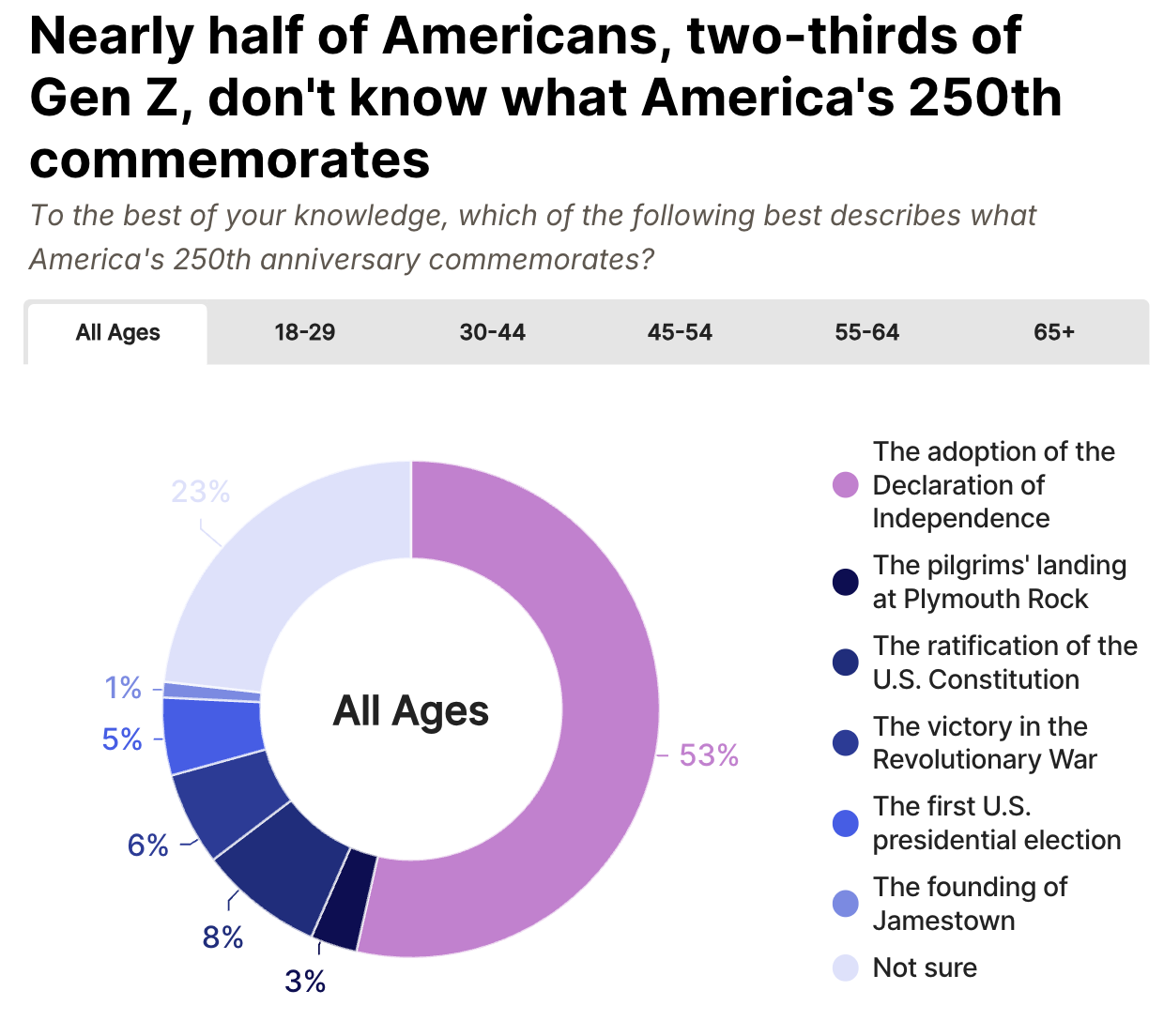
America 250 is the 250th anniversary of the United States declaring independence. On July 4, 1776, the Continental Congress adopted the Declaration of Independence. Add 250 years and you land on July 4, 2026 — the country’s 250th birthday.
The fancy word for a 250th anniversary is the semiquincentennial (sem-ee-kwin-sen-TEN-ee-uhl). It’s a mouthful, which is exactly why most people — including the official national effort — just call it America 250.
A 50th anniversary is a golden jubilee. A 100th is a centennial. A 250th is rare enough that it doesn’t have a household name — which is part of what makes 2026 special. The last time the country marked a big founding anniversary at this scale was the Bicentennial in 1976, 50 years ago. Many grandparents remember it; most parents today weren’t born yet. Your kids will remember 2026 the way that generation remembers ’76.
Why it matters for families this year
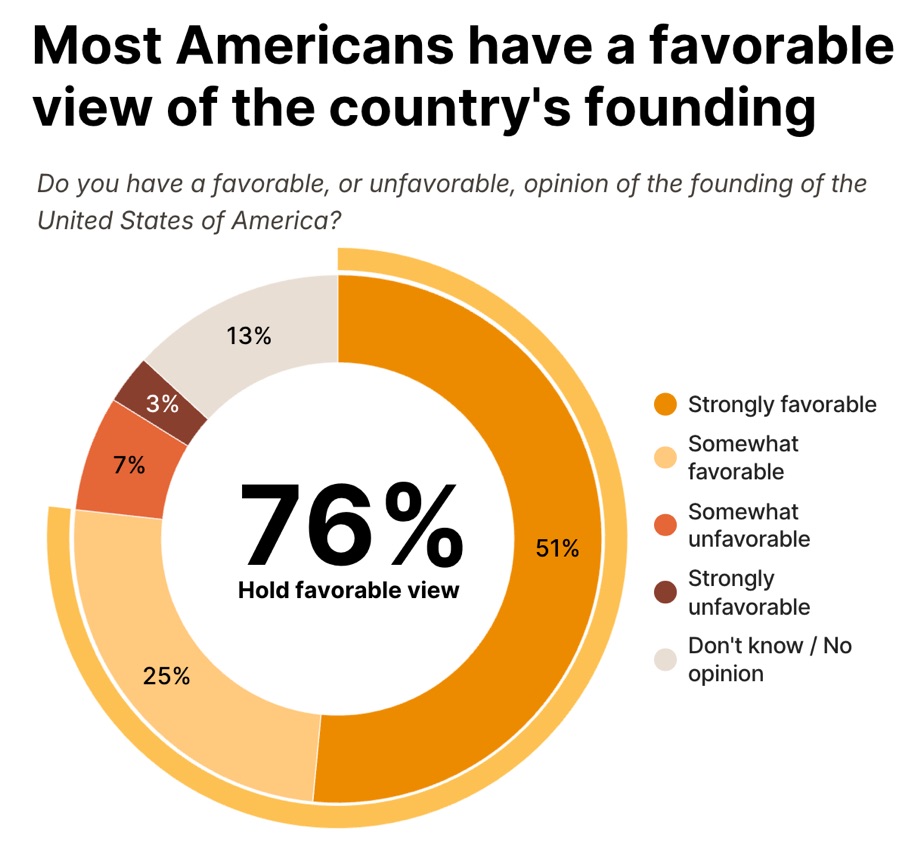
A round-number anniversary is a hook — a reason to pay attention to something we usually rush past. For families, that’s the real opportunity: 2026 gives American history a “why now.”
- It’s a natural, non-partisan reason to talk about where the country came from, what the founders were actually arguing about, and why ideas like “life, liberty, and the pursuit of happiness” still matter.
- It lines up perfectly with the 2026–2027 school year — a built-in unit study theme that runs all year, not just on the Fourth of July.
- It gives kids a sense of belonging to a story bigger than themselves. Knowing where you come from — as a family and as a country — helps kids feel rooted.
You don’t have to make it a big production. You just have to notice it and lean in a little.
Simple ways to celebrate America 250 at home
You don’t need a trip to Philadelphia or a big budget. Pick a few of these and spread them across the school year.
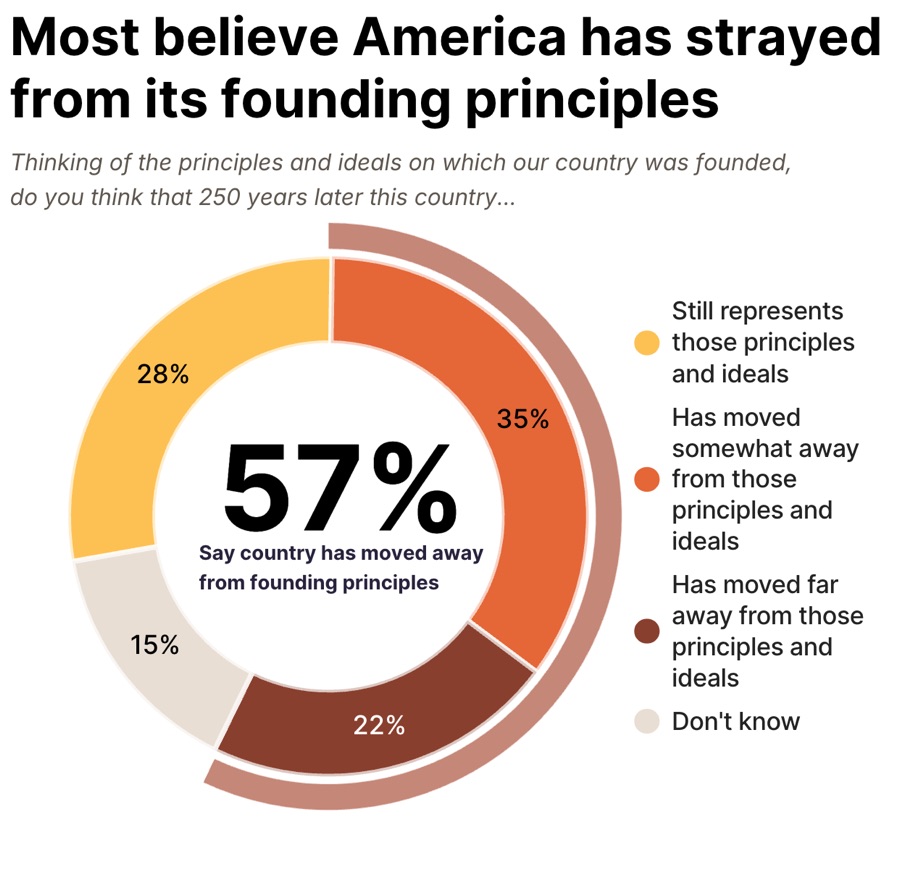
- Read the Declaration together — in kid-friendly English. Start with the famous second sentence (“We hold these truths to be self-evident…”) and talk about what each phrase means. Even young kids can grasp “everyone is created equal” and “governments should protect people’s rights.”
- Have a birthday party for America. Bake a cake, add a “250” candle, and let the kids plan it. A literal birthday makes the anniversary concrete for little ones.
- Make a family timeline. Put 1776 on one end and 2026 on the other, then fill in a few events your kids find interesting. Seeing 250 years laid out helps history feel real.
- Sign your own Declaration. Trim a feather quill, use watered-down coffee for ink, and let each kid sign their name the way the founders did. Talk about why signing it was a brave thing to do.
- Visit — or virtually visit — a founding site. Independence Hall, a local Revolutionary War landmark, or a living-history museum. Can’t travel? Bring the founding era home with books, documentaries, or an immersive app.
- Adopt one founder to “get to know.” Let each kid pick a founder (Jefferson, Franklin, Abigail Adams, Phillis Wheatley) and become the family expert on that person.
- Fly a flag and learn what it means. Stars, stripes, colors — give kids the real story behind the design, then let them sketch a family flag of their own.
- Check your library and state’s America 250 events. Many states have official commissions running free family programming, reading challenges, and exhibits all year.
Turn “learning about 1776” into “experiencing 1776”
History sticks better when kids experience it instead of just reading about it. That’s the whole idea behind 1776, our immersive app: instead of memorizing dates, kids walk into Independence Hall, meet the founders, sit in on the debates, and sign the Declaration themselves. It’s the closest thing to being there — and for a lot of kids, it’s the moment the founding finally clicks.
America 250 only happens once. However you mark it, 2026 is a rare chance to make the founding feel real to your kids — and to give them a story they’ll carry for the rest of their lives.
Want your kids to experience 1776 instead of just reading about it? 1776 is live now on iPhone + Android — a one-time $5 unlock, no subscription. immersivehistory.com/1776