

In 2026, the United States turns 250 — the semiquincentennial. It’s the kind of anniversary that comes once in a lifetime, and it’s a rare chance to make American history feel real to your kids instead of like a chapter to get through. You don’t need a big budget or a trip to Philadelphia. Most of these ideas use what you already have at home.
Here are 25+ ways to celebrate, grouped so you can pick what fits your family this week.
Hands-on & crafts
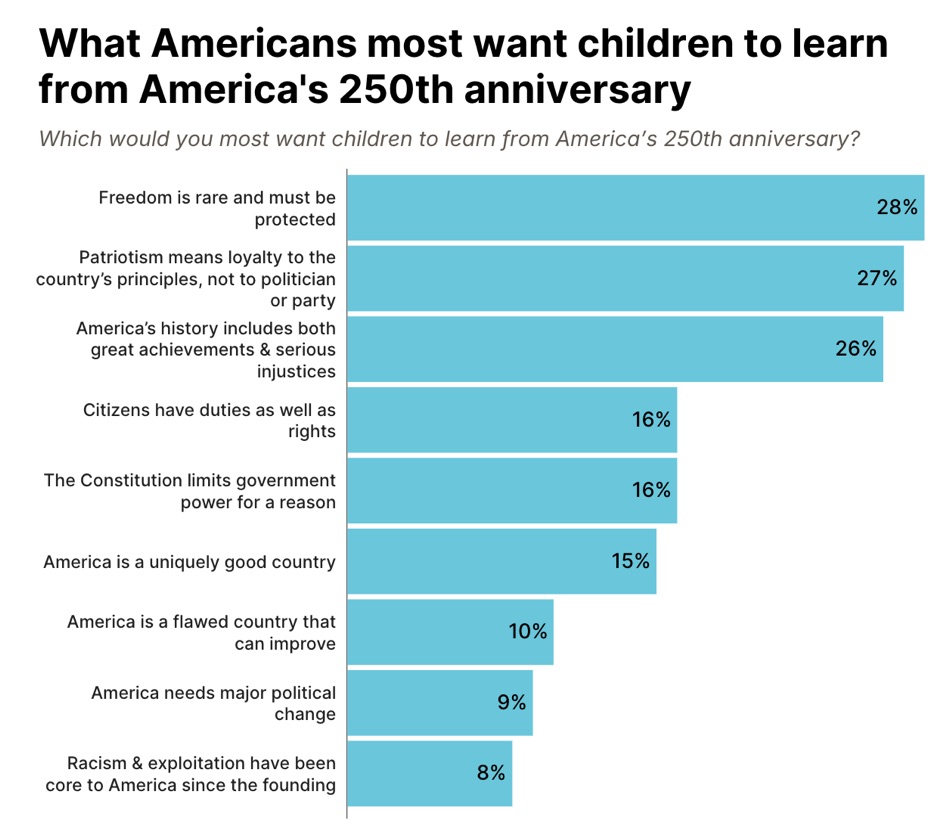
- Make a “quill and ink” and sign your own Declaration. Trim a feather, use watered-down coffee for ink, and let each kid sign their name the way the founders did. Talk about why putting your name on something can be brave.
- Build a colonial lantern out of a jar and a battery tea light — a nod to “one if by land, two if by sea.”
- Design a 250th-birthday flag. Give kids the real rules (stars, stripes, what they mean) and let them create a family flag that celebrates what they love about their country.
- Bake a birthday cake for America and put 250 sprinkles or a “250” candle on top. Kids love a literal birthday.
- Sew or draw a “founders trading card” set — one card per founder with a fact and a doodle.
- Try colonial crafts: candle dipping, weaving, or making butter in a jar by shaking cream.
Read-alouds & living books
- Read a picture-book biography of a founder each week (Jefferson, Franklin, Abigail Adams, and lesser-known figures like James Armistead or Phillis Wheatley).
- Read the Declaration out loud together — then read a plain-English version and talk about what each big idea actually means.
- Keep a family “founding words” copywork notebook. Pick one line a week (“We hold these truths…”) and let kids copy it in their best handwriting.
- Narrate what you read. After a chapter, have each kid tell the story back in their own words — a simple Charlotte Mason technique that makes history stick.
Field trips (real and virtual)
- Visit a local Revolutionary or colonial-era site — a fort, a battlefield, a historic home, or even an old cemetery with 18th-century graves.
- Find your state’s 250th events. Nearly every state has an America 250 commission planning festivals, reenactments, and exhibits in 2026.
- Tour Independence Hall virtually if you can’t get to Philadelphia — then compare it to the real thing on a map.
- Take a “founding foods” field trip to a colonial-style restaurant or make a colonial meal at home (johnnycakes, stew, cornbread).
Big-idea conversations
- Talk about “life, liberty, and the pursuit of happiness” in kid terms: What does freedom mean to you? What’s worth standing up for?
- Compare the Declaration and the Constitution — one is a breakup letter, the other is a rulebook for the new country.
- Ask “who was left out?” Age-appropriately, discuss the people whose freedom came later — it teaches honesty and hope at the same time.
- Interview a grandparent or older relative about what they love about America and what’s changed in their lifetime.
Make it a project
- Build a week-by-week 250th unit study — one founder, one document, one event, one activity per week through the school year.
- Start a “250 things” family bucket list and check off small history adventures all year.
- Put on a family reenactment of the signing of the Declaration, complete with costumes and roles.
- Create a founding-era timeline down a hallway wall with sticky notes kids add to as they learn.
- Map the 13 colonies and let each kid “adopt” one to research and present.
Screen time that actually teaches
- Watch a kid-friendly documentary on the Revolution, then talk about one thing that surprised them.
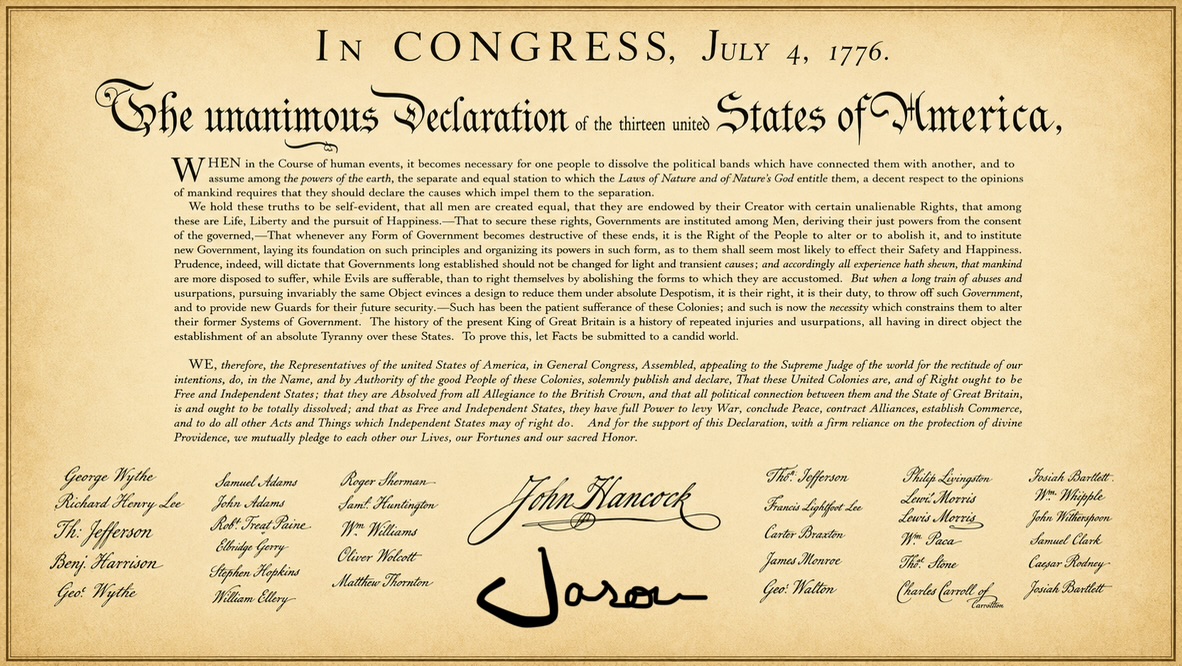
- Let them experience 1776 instead of just reading it. Some things land better when a kid does them. In the 1776 app, kids step into Independence Hall, meet the founders, solve puzzles, and sign the Declaration themselves — a “wow” that makes the history stick. It’s live now on iPhone and Android with a one-time $5 unlock for the whole family. A natural companion to any of the activities above as America turns 250 this year: immersivehistory.com/1776.
The point isn’t to do all 25
Pick three