

The Declaration of Independence is one of the most important documents in human history — and also one of the easiest to make boring. Long sentences, 18th-century grammar, a list of grievances against a king your kids have never heard of. It’s no wonder so many children glaze over.
But the Declaration doesn’t have to be a wall of hard words. Underneath the formal language is a genuinely thrilling story: a group of people risking everything to say a brand-new idea out loud — that ordinary people, not kings, get to decide how they’re governed. Here’s how to teach it so it actually lands, especially as America marks its 250th year.
Start with the big idea, not the document
Before you read a single line, give your kids the one sentence the whole thing is built on: people have rights that no government is allowed to take away, and if a government tries, the people can change it. That’s it. Everything else in the Declaration is an argument for that idea. When kids understand the point first, the hard words become details instead of obstacles.
Try asking: “What would you do if someone in charge kept making unfair rules and wouldn’t listen?” Let them answer. That’s the emotional core of 1776 — and children feel it immediately.
Translate the famous line into kid English
“We hold these truths to be self-evident, that all men are created equal, that they are endowed by their Creator with certain unalienable Rights, that among these are Life, Liberty and the pursuit of Happiness.”
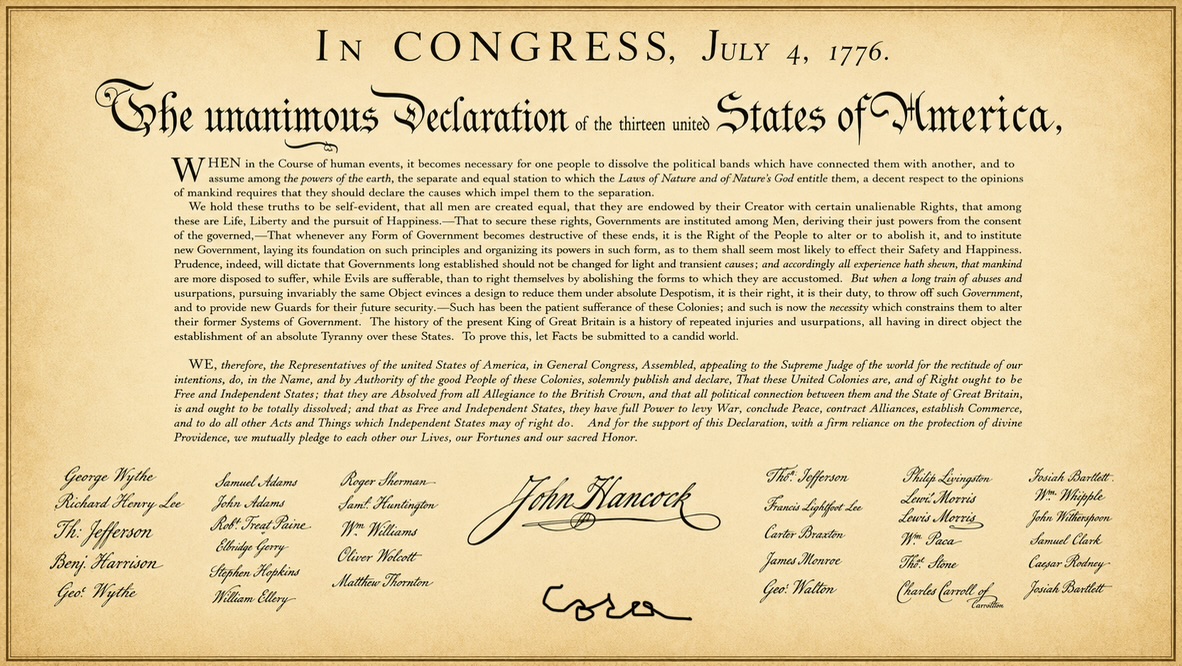
In plain terms: Some things are just obviously true. Everyone matters the same. Everyone is born with rights nobody can take away — like being alive, being free, and getting to chase what makes you happy.
Read the original out loud once for the music of it, then read your translation. Kids remember the idea, not the vocabulary.
Make it a story with real people
The Declaration wasn’t written by a committee of statues. It was written mostly by a nervous 33-year-old (Thomas Jefferson) who was edited — sometimes grumpily — by older men like Benjamin Franklin and John Adams. They argued. They crossed things out. They knew that signing meant they could be hanged for treason.
Give the founders personalities and your kids will care what happens to them. Franklin the wise joker, Adams the stubborn arguer, Jefferson the quiet writer who’d rather be home. History becomes a cast, not a chapter.
Let them “do” it, not just read it
Kids remember what they experience. A few hands-on ways in:
- Rewrite a rule. Have them draft their own “declaration” against an unfair rule at home (bedtime, chores) using the same structure: here’s what’s wrong, here’s what we believe, here’s what we’re going to do about it.
- Sign it. Print a blank copy and let them add their signature the way the delegates did — big and bold, like John Hancock.
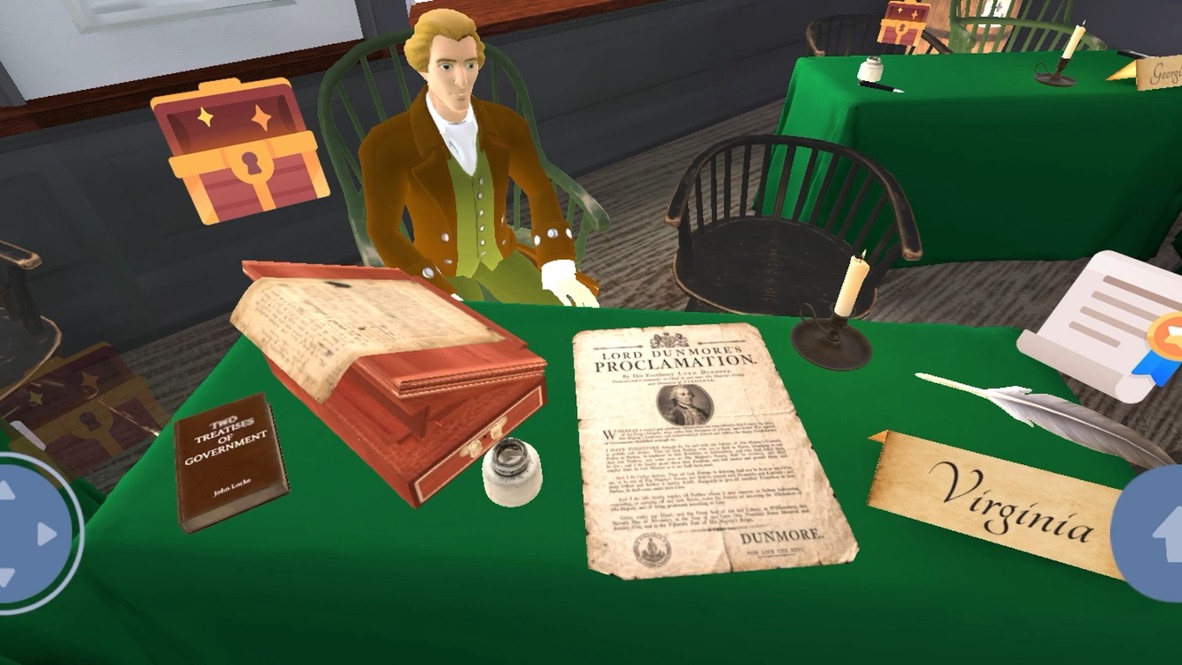
- Step inside the room. This is exactly why we built 1776, an app where kids walk into Independence Hall, meet the founders, solve puzzles, and sign the Declaration themselves. When a child physically “signs” after helping Jefferson work through a draft, the document stops being homework and becomes something they were part of. (30-second trailer · try it here)
Keep it honest and keep it hopeful
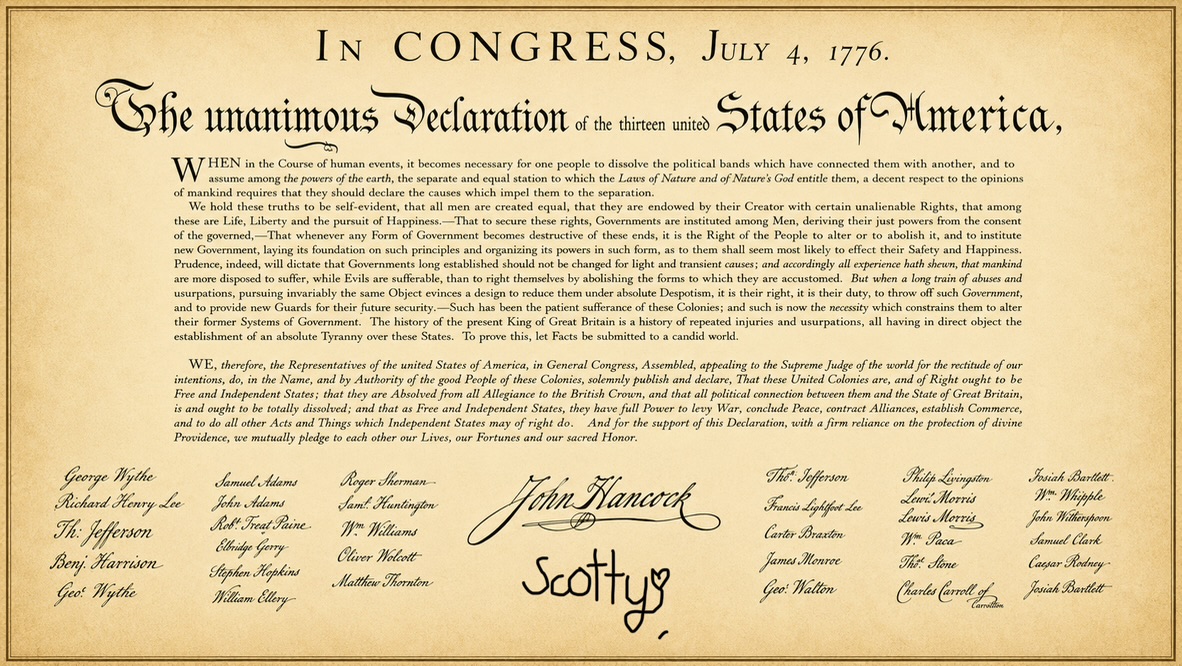
Older kids will notice the gap between “all men are created equal” and the reality of 1776, when that promise didn’t yet include everyone. Don’t dodge it. The honest version is actually more inspiring: the Declaration set a standard the country has been trying to live up to ever since, and every generation gets to help close the gap. That’s a story kids can see themselves inside of.
The bottom line
Teach the idea before the words, give the founders faces, and let kids do the signing instead of just reading about it. Do that, and the Declaration stops going over their heads — and starts landing in their hearts, right on time for America’s 250th.
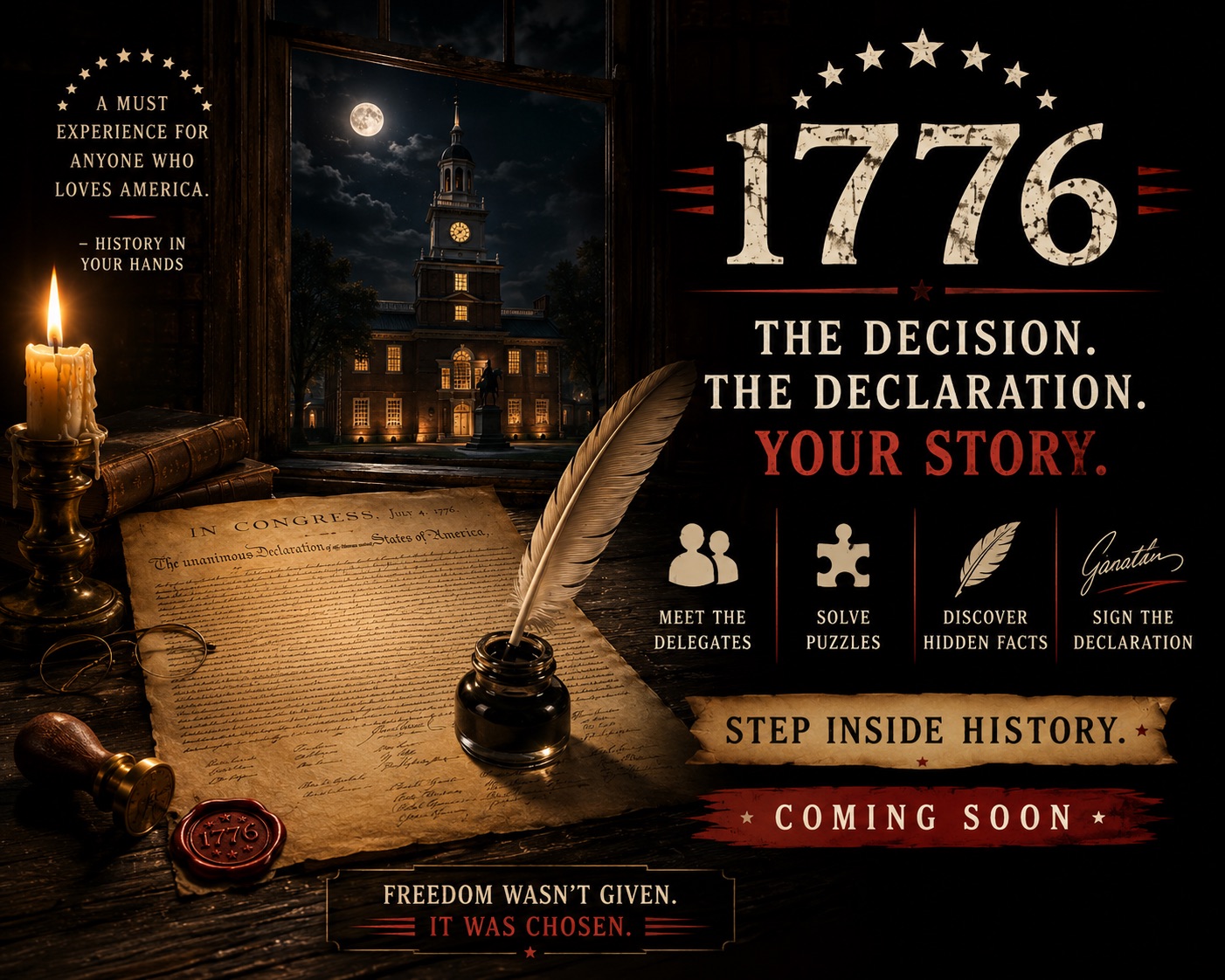
1776 is an immersive history app for kids — step into Independence Hall, meet the founders, and sign the Declaration. Live now on iPhone and Android, one-time $5 unlock for the whole family. immersivehistory.com/1776