
If your child has ever asked “what does the Declaration of Independence actually say?” — and you’ve found yourself squinting at words like unalienable and usurpations — you’re not alone. The Declaration is one of the most important documents in American history, but it was written in 1776 for grown-up lawmakers, not for kids. The good news: the ideas underneath the fancy words are simple, powerful, and completely understandable for children when you translate them.
Here’s the whole Declaration, broken into its four real parts, in plain English.
Part 1: The Introduction — “We need to explain ourselves”
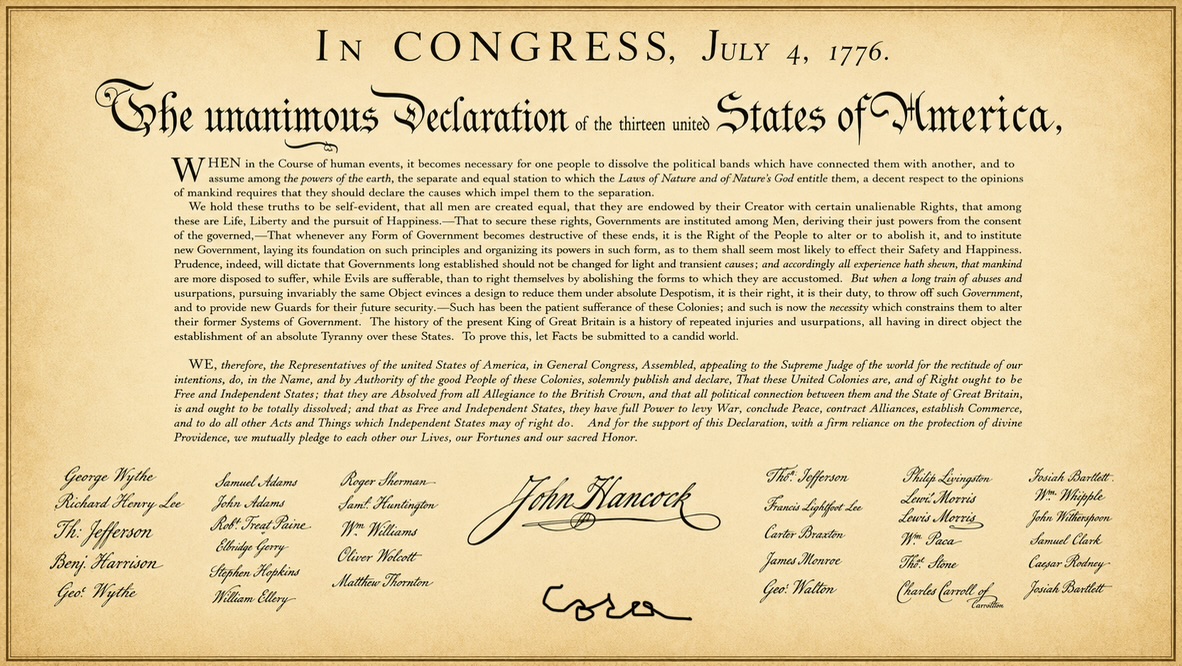
What it says (roughly): When a group of people decides to break away and become their own country, they owe the world a respectful explanation of why.
In kid language: “We’re not doing this quietly or sneakily. We’re going to tell everyone exactly why we’re leaving, because that’s the fair and honest thing to do.”
This is a great first lesson for kids: even when you’re standing up for yourself, you explain your reasons.
Part 2: The Big Ideas — the most famous sentence in America
This is the heart of it: “We hold these truths to be self-evident, that all men are created equal, that they are endowed by their Creator with certain unalienable Rights, that among these are Life, Liberty and the pursuit of Happiness.”
In plain English for kids:
- “Self-evident” means so obviously true you shouldn’t have to argue about it.
- “All men are created equal” means every person matters the same — nobody is born better than anyone else.
- “Unalienable rights” means rights nobody is allowed to take away from you — not a king, not anyone.
- “Life, liberty, and the pursuit of happiness” means you get to be alive, to be free, and to chase the things that make a good life.
And one more idea kids often miss: governments only get their power because the people agree to let them govern. If a government becomes cruel and stops protecting people’s rights, the people have the right to change it. That was a genuinely radical idea in 1776.
Part 3: The List of Complaints — “Here’s what the king did wrong”
The longest section of the Declaration is a list of specific things King George III did that the colonists thought were unfair — taxing them without asking, sending soldiers to live in their homes, ignoring their local laws.
In kid language: “We tried to fix this the polite way, over and over, and the king wouldn’t listen. Here’s our list of everything that went wrong.”
This part is perfect for teaching kids that big decisions usually come after people try smaller solutions first — the colonists didn’t jump straight to independence.
Part 4: The Conclusion — “So we’re free now”
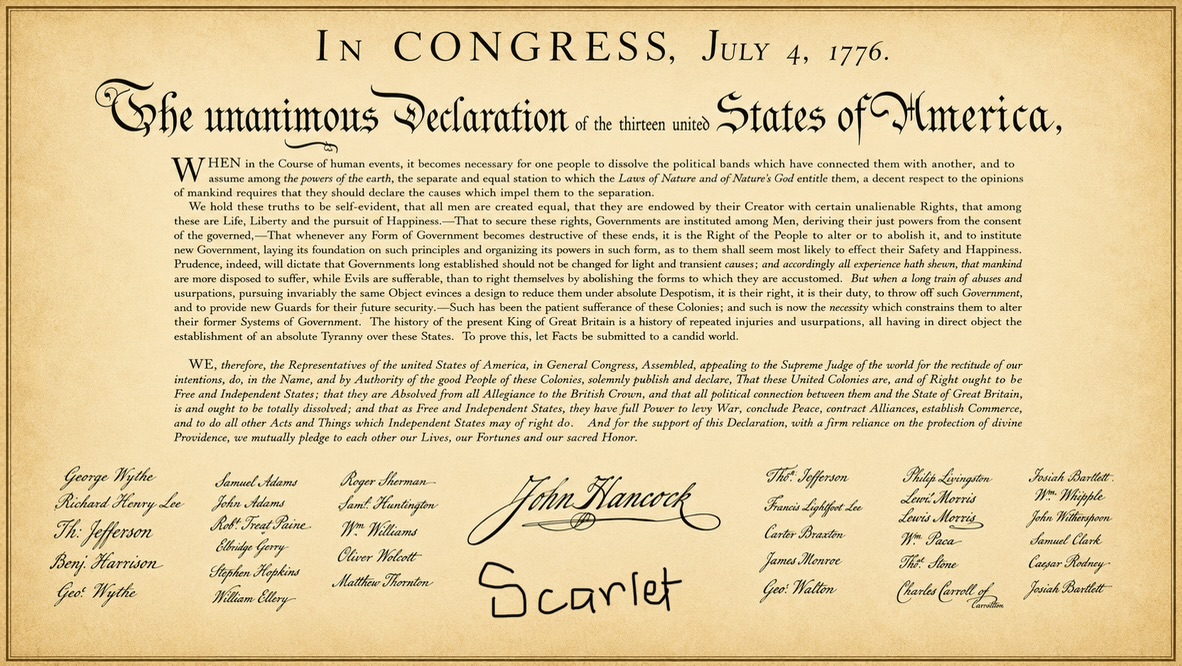
The document ends by declaring the thirteen colonies “Free and Independent States,” and the signers pledge “our Lives, our Fortunes and our sacred Honor” to each other.
In plain English: “We are officially our own country now. And we’re so serious about this that we’re willing to risk everything — even our lives — for it.”
That last line lands hard with kids once they realize signing this document could have gotten those men executed for treason. It wasn’t a form. It was a genuine act of courage.
A simple way to make it stick
Kids remember what they do, not just what they read. After you talk through the four parts, try one of these:
- Have your child write their own “declaration of independence” from something — bedtime, chores, a younger sibling’s rules — using the same four parts (introduction, big ideas, list of complaints, conclusion). It’s funny and it teaches the structure.
- Let them actually sign their name the way the founders did, and talk about why signing felt so risky.
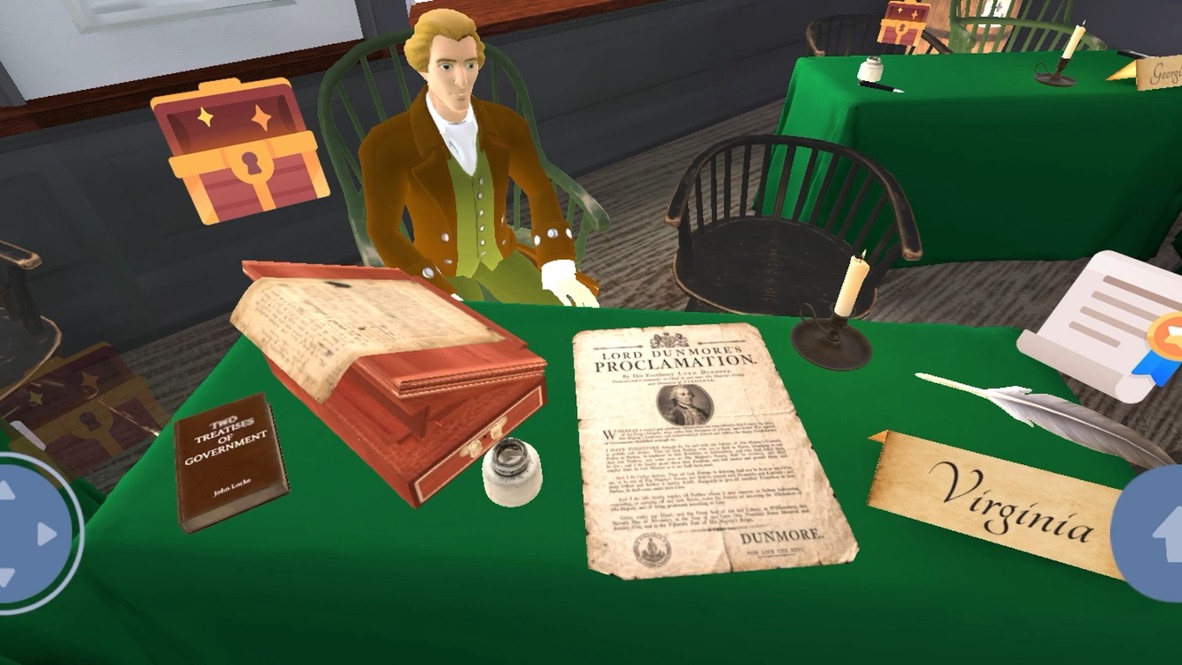
That moment of signing is exactly why we built 1776 — a mobile app where kids don’t just read about Independence Hall, they step inside it, meet the founders, work through the debate, and sign the Declaration themselves. It turns “what does it say?” into “I was there.” As America marks its 250th this year, it’s a memorable way to make the founding land for kids. You can see it at immersivehistory.com/1776.
Want more plain-English history for your family? These pair well with this post: “How to teach the Declaration of Independence to your kids,” “Who signed the Declaration of Independence? A kid-friendly guide,” and “Life, liberty & the pursuit of happiness: teaching the big ideas to children.”