

Most parents I talk to have made peace with the same uncomfortable trade. Screens are part of the house now. The question stopped being whether and became which — and that question turns out to be much harder than it sounds, because every app in the education category insists it teaches something.
A lot of them don’t. Here’s how to tell.
The problem with “educational”
The word is unregulated. An app can call itself educational because it puts a fact on the screen and asks a child to tap the right box. That’s a flashcard with sound effects. It isn’t wrong, exactly, and there’s a place for drill — but it’s worth being honest that a child can complete a hundred of those taps and retain almost nothing a week later.
What separates the apps worth paying for is usually not the content. It’s what the child is asked to do with it.
Five questions worth asking before you buy
1. Is my child doing something, or watching something?
Passive video with a quiz bolted onto the end is the most common format in the category, because it’s the cheapest to make. Look for apps where the child makes choices that matter — where they have to decide, build, arrange, argue, or solve, and where a wrong turn produces a different result rather than a buzzer.
2. Will my child have something to tell me about afterward?
This is the single best test I know, and it costs nothing. Charlotte Mason parents will recognize it as narration. If your child can come to dinner and tell you what happened — unprompted, in their own words, with the details they chose — the material landed. If the only report available is a score, it didn’t.
3. Does it respect the actual history?
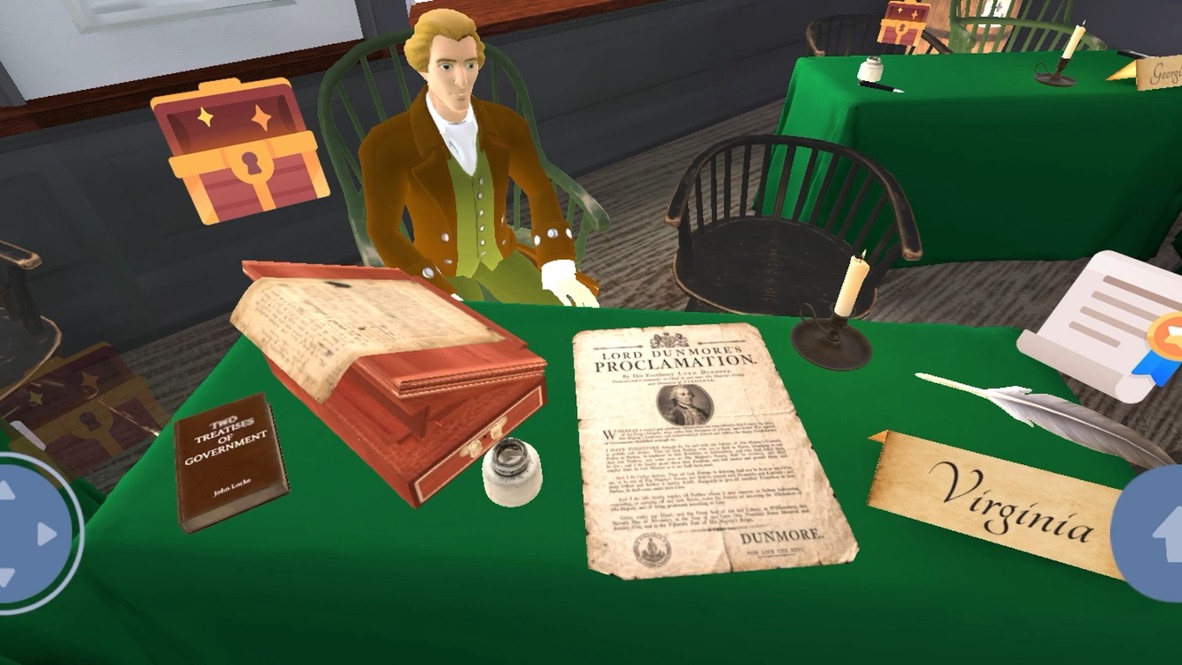
Ask whether the app is built on primary sources or on a vague costume-drama version of the past. In American founding-era material specifically: are the words the founders actually wrote anywhere in it? Is the disagreement preserved, or has everything been sanded into a single agreeable message? Real history is full of argument, and children are perfectly capable of handling that. Apps that flatten it are usually flattening it for their own convenience, not your child’s.
4. What’s the business model?
This matters more than parents expect. An app funded by ads is optimized to keep your child on it as long as possible — that is what it is being paid to do. A subscription has a milder version of the same pressure. A one-time purchase has no reason to hold your child longer than the experience is worth. None of these is automatically disqualifying, but read the incentive before you read the marketing.
5. Does it end?
Genuinely good educational software has a shape: a beginning, a middle, and a finish your child arrives at. Endless apps are usually endless by design. It is fine — good, even — for a history app to be done after a few hours and for your child to walk away having experienced something whole.
Red flags
- Streaks, daily-login rewards, and anything that makes your child anxious about missing a day.
- Ads inside a children’s product.
- Content that could be any subject with the art swapped out.
- No visible author, historian, or educator behind it.
- Reviews that praise how long it keeps kids busy, rather than what kids got from it.
Green flags
- A named creator who will tell you why they built it.
- Primary-source language, used at a level a child can actually meet.
- A finish line.
- A child who talks about it afterward.
- One purchase, whole family, no subscription.
A note on “how much is too much”
The honest answer is that duration is the wrong axis. Twenty minutes of a child arguing with Thomas Jefferson about the wording of a sentence is a different substance from ninety minutes of tapping a matching game, and treating both as “an hour of screen time” flattens a real distinction. Watch what the screen is doing to your child’s attention, not just how long it holds it.
Where 1776 fits
I’ll be direct about my own bias, since I built one of these.
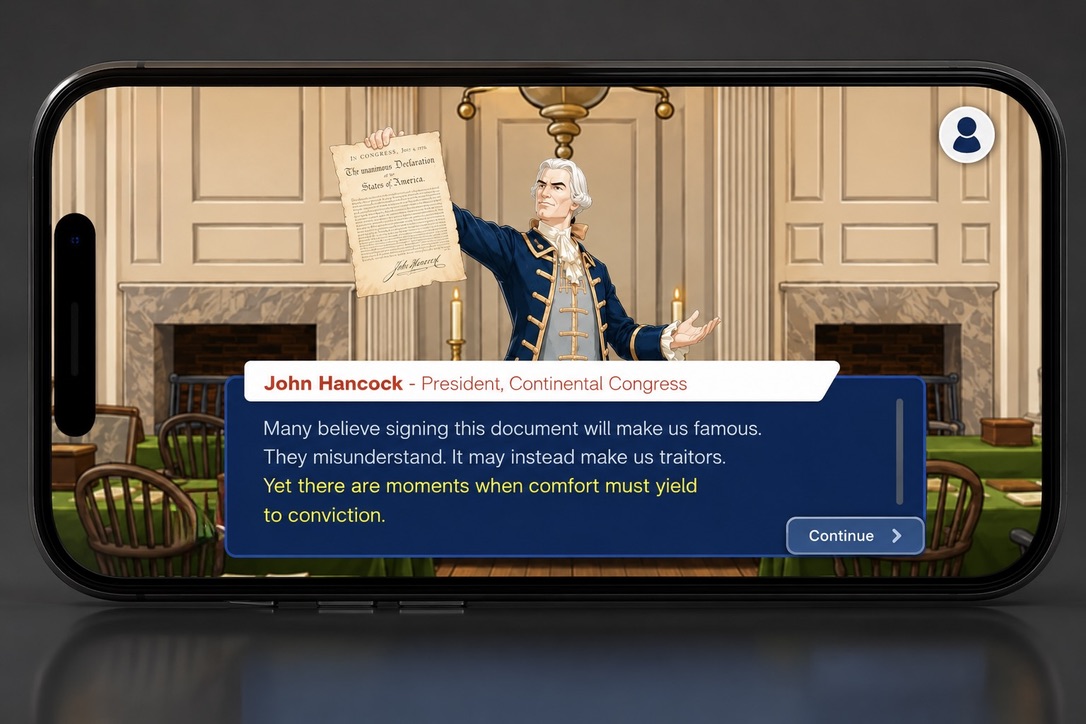
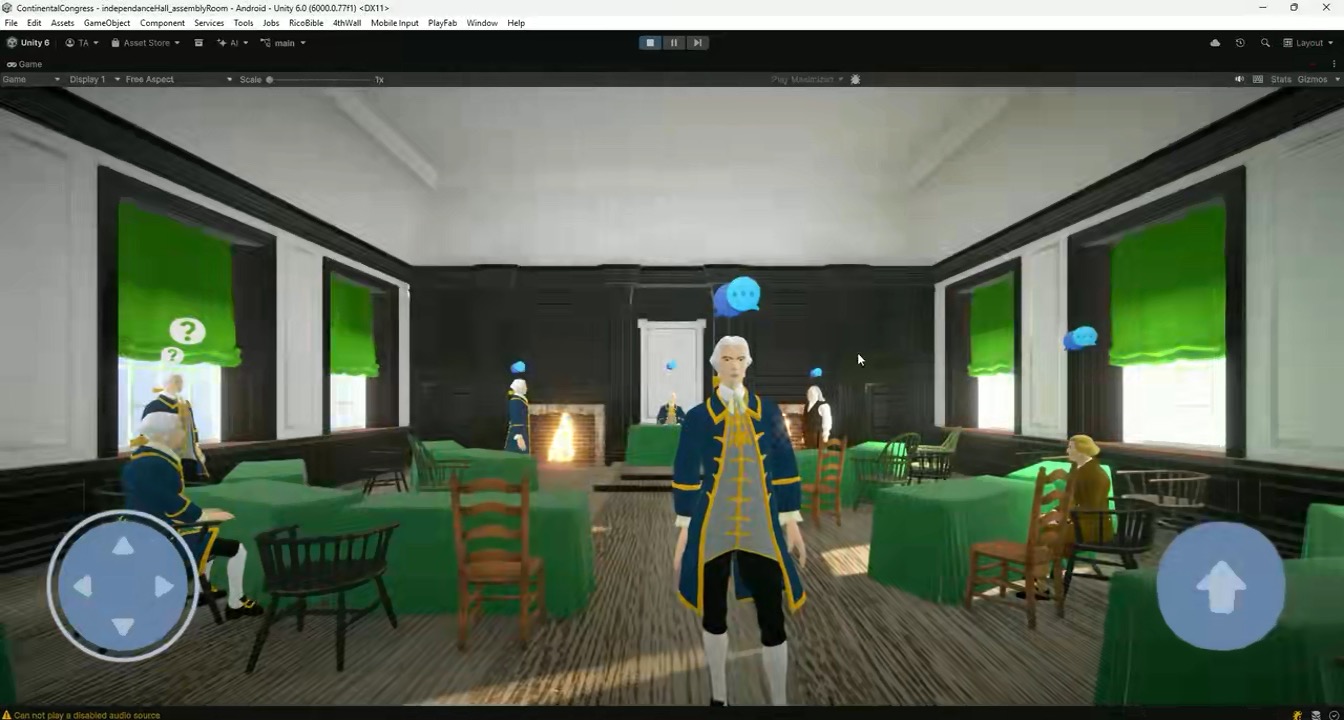
1776 puts children inside Independence Hall. They meet the founders, work through the Declaration’s actual language with Jefferson, solve their way through the room, and sign the document themselves. It ends — there’s a finish, and it’s the signing. It’s a one-time $5 unlock that covers the whole family on one account, with no ads and no subscription, because I didn’t want a reason to keep your child there longer than the experience deserves.
Apply the five questions above to it. Apply them to everything else on the shelf too. The framework is worth more than any single recommendation I could give you — including mine.
1776 is available now on iPhone and Android. Watch the trailer.
Immersive History builds experiences that let children step into the moments that made the world. As America marks its 250th, we think that matters more than usual.