

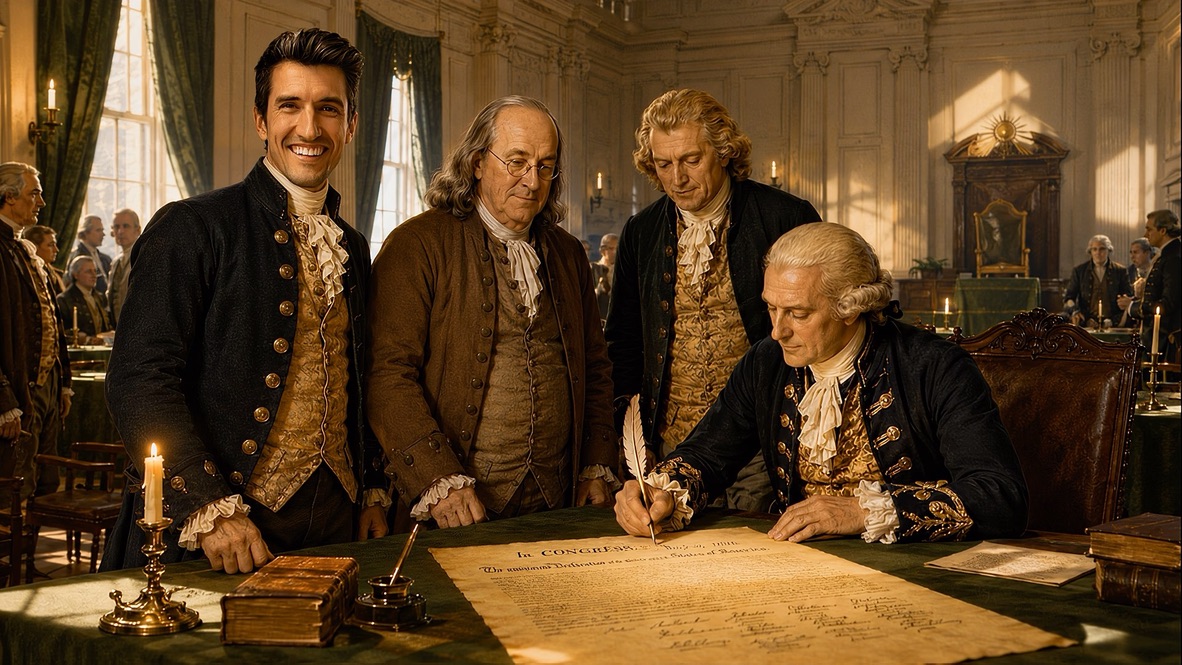
A textbook tells your child that the Declaration of Independence was signed in 1776. A living book puts them in the sweltering room in Philadelphia, watching a nervous young man decide whether to put his name on a document that could get him hanged.
That’s the whole difference. Charlotte Mason called them “living books” — books written by one person who loved the subject, in real language, with real people in them. Not committees. Not summaries. Kids remember them because they feel something while reading, and feeling is what makes history stick.
Here’s a working list for the American Revolution, sorted by age, with a note on what each one actually does well. You don’t need all of them. Pick two or three and go deep.
Ages 5–8: first encounters
Sam the Minuteman (Nathaniel Benchley) — An early reader that gets a young child to Lexington Green without terrifying them. Sam is a boy, which matters; a kid meets the Revolution through someone their own size.
The Fourth of July Story (Alice Dalgliesh) — Old-fashioned in the best way. It explains why the day exists in language a six-year-old can hold onto.
Katie’s Trunk (Ann Turner) — Quietly remarkable, because it’s told from a Loyalist family’s side. Even young kids can grasp that neighbors disagreed, and that the disagreement was frightening for everyone.
Can’t You Make Them Behave, King George? (Jean Fritz) — Fritz is the patron saint of making founders human. This one gives kids a king who is stubborn and a little ridiculous rather than a cardboard villain.
Ages 8–12: the heart of the range
This is where the Revolution really lands, and where the best books live.
Johnny Tremain (Esther Forbes) — Still the anchor. An apprentice silversmith with a ruined hand gets swept into the Boston resistance. It’s a genuine novel — Johnny is proud, sometimes unlikable, and grows — and it braids the Tea Party and Lexington into a life instead of a timeline.
George Washington’s Socks (Elvira Woodruff) — Time-travel adventure that drops modern kids into the crossing of the Delaware. Perfect for the reluctant reader who needs a hook before they’ll accept history.
Woods Runner (Gary Paulsen) — Harder-edged and honest about the war’s brutality on the frontier. Best for older kids in this band, and worth previewing first.
Guns for General Washington (Seymour Reit) — The true story of hauling cannon from Ticonderoga to Boston in winter. Kids love it because it’s a logistics problem, and the impossible thing actually works.
The Jean Fritz biographies — Why Don’t You Get a Horse, Sam Adams?, Where Was Patrick Henry on the 29th of May?, What’s the Big Idea, Ben Franklin? Short, funny, and full of the odd human detail that makes a founder memorable. If you read nothing else, read these.
Toliver’s Secret (Esther Wood Brady) — A timid ten-year-old girl carries a secret message through occupied New York. Great for kids who don’t see themselves in battle stories.
Ages 12+: complexity and argument
My Brother Sam Is Dead (James & Christopher Collier) — A family split between Patriot and Loyalist sons. It refuses easy answers about the cost of the war, which is exactly what a older student needs.
Chains (Laurie Halse Anderson) — An enslaved girl in Revolutionary New York, promised freedom and betrayed by both sides. The essential companion volume: it holds “all men are created equal” up against what was actually happening, without cynicism about the ideal itself.
April Morning (Howard Fast) — One day at Lexington through the eyes of a fifteen-year-old. Compressed, intense, and unforgettable.
1776 (David McCullough) — For a strong high-school reader, or for you to read aloud in pieces. McCullough writes narrative history the way a novelist writes plot.
Primary sources count as living books, too
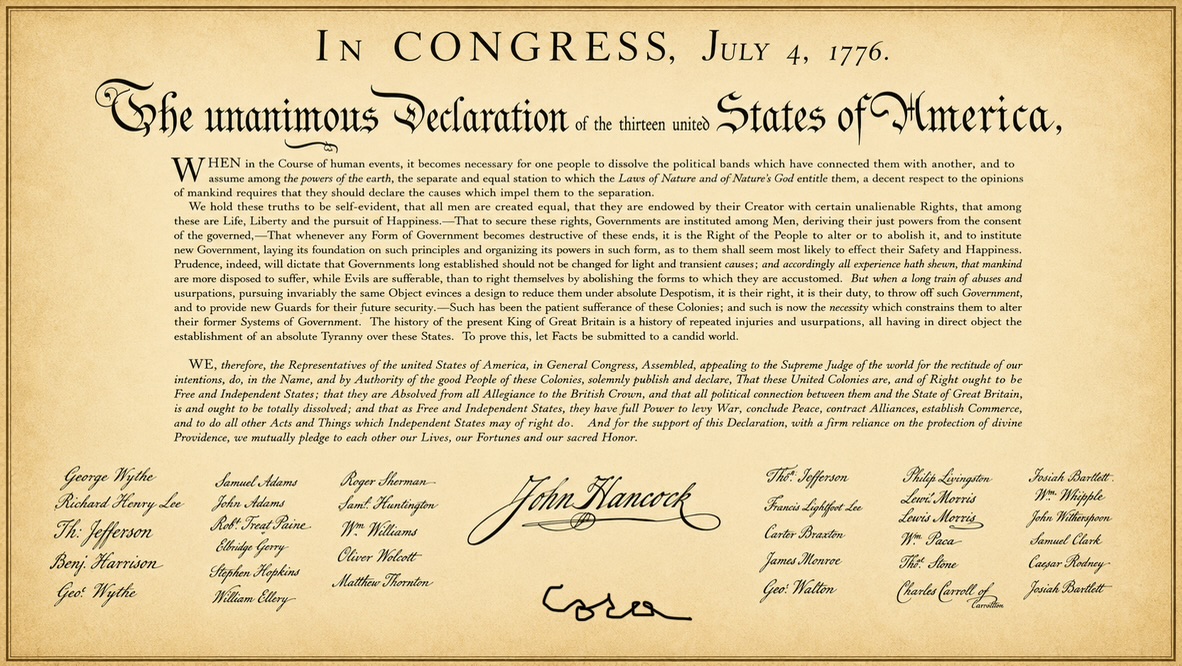
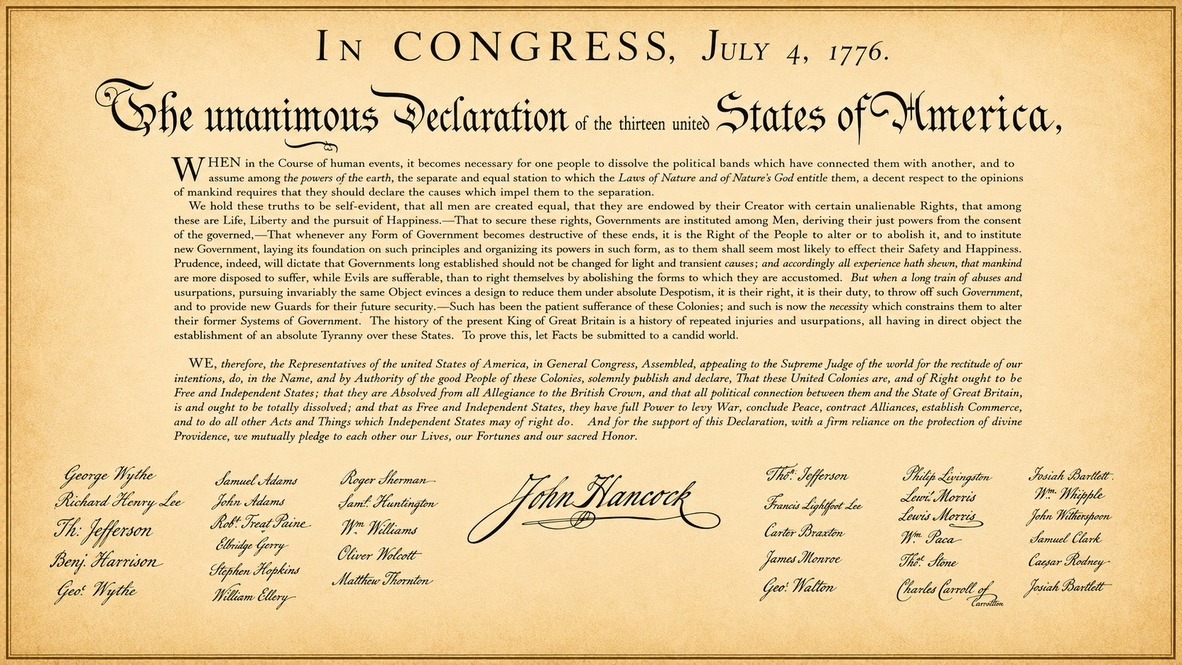
Don’t skip the real thing. The Declaration itself is shorter than most people remember. Read the preamble aloud — slowly, all of it — and then ask what each phrase actually means. Abigail Adams’s letters to John are funny, sharp, and personal. Common Sense excerpts still crackle. Nothing you narrate about a document beats a child hearing its actual words.
How to build a year around them
The simplest structure that works: one spine, one read-aloud, one free-reading basket.
Use a Jean Fritz biography or a narrative history as your spine. Keep one novel going as the family read-aloud — Johnny Tremain or George Washington’s Socks, depending on ages. Fill a basket with picture books and let kids graze without assignments. Then have them narrate: “Tell me what happened.” That’s the whole method, and it works.
Add a primary source every few weeks, and let one rabbit trail per child run as long as it wants to.
Where an experience fits
Living books work because they put a child inside an event rather than above it. That’s also why an immersive experience pairs so naturally with them — it’s the same instinct in a different medium.
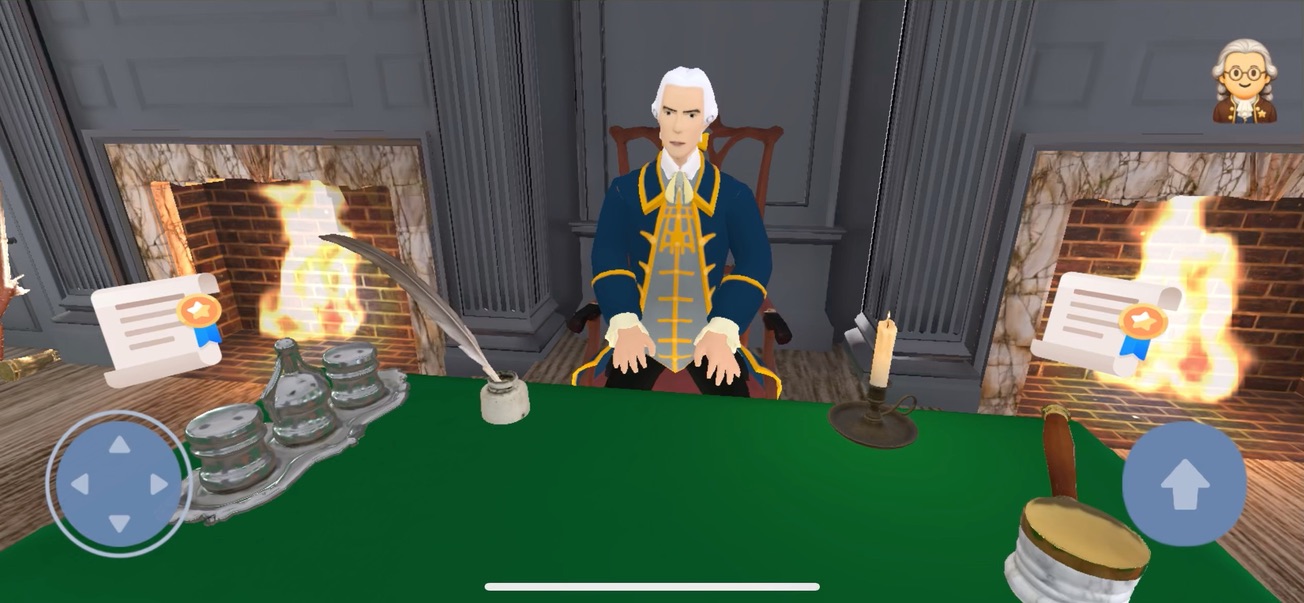
It’s the reason we built 1776: kids walk into Independence Hall, meet the founders, help Jefferson work through the wording, and sign the Declaration themselves. Read Johnny Tremain on Monday and step into Philadelphia on Tuesday and something clicks — the book stops being a story about strangers and becomes a place your child has been. (There’s a 30-second look at immersivehistory.com/1776.)
The bottom line
You don’t need a Revolution curriculum. You need three or four good books, a habit of reading aloud, and permission to follow whatever your kid gets obsessed with. In America’s 250th year, the shelves are unusually well stocked and the country is full of excuses to go see the real places.
Start with one book this week. That’s genuinely enough.
Want to give your kids a way to step inside the story they’re reading? 1776 is live now on iPhone and Android — a one-time unlock for the whole family. See it at immersivehistory.com/1776.