Most kids can recite the phrase long before they can explain it. “Life, liberty, and the pursuit of happiness” has the rhythm of a nursery rhyme — which is exactly why it slides past without landing.
The sentence it comes from is one of the boldest claims ever written down:
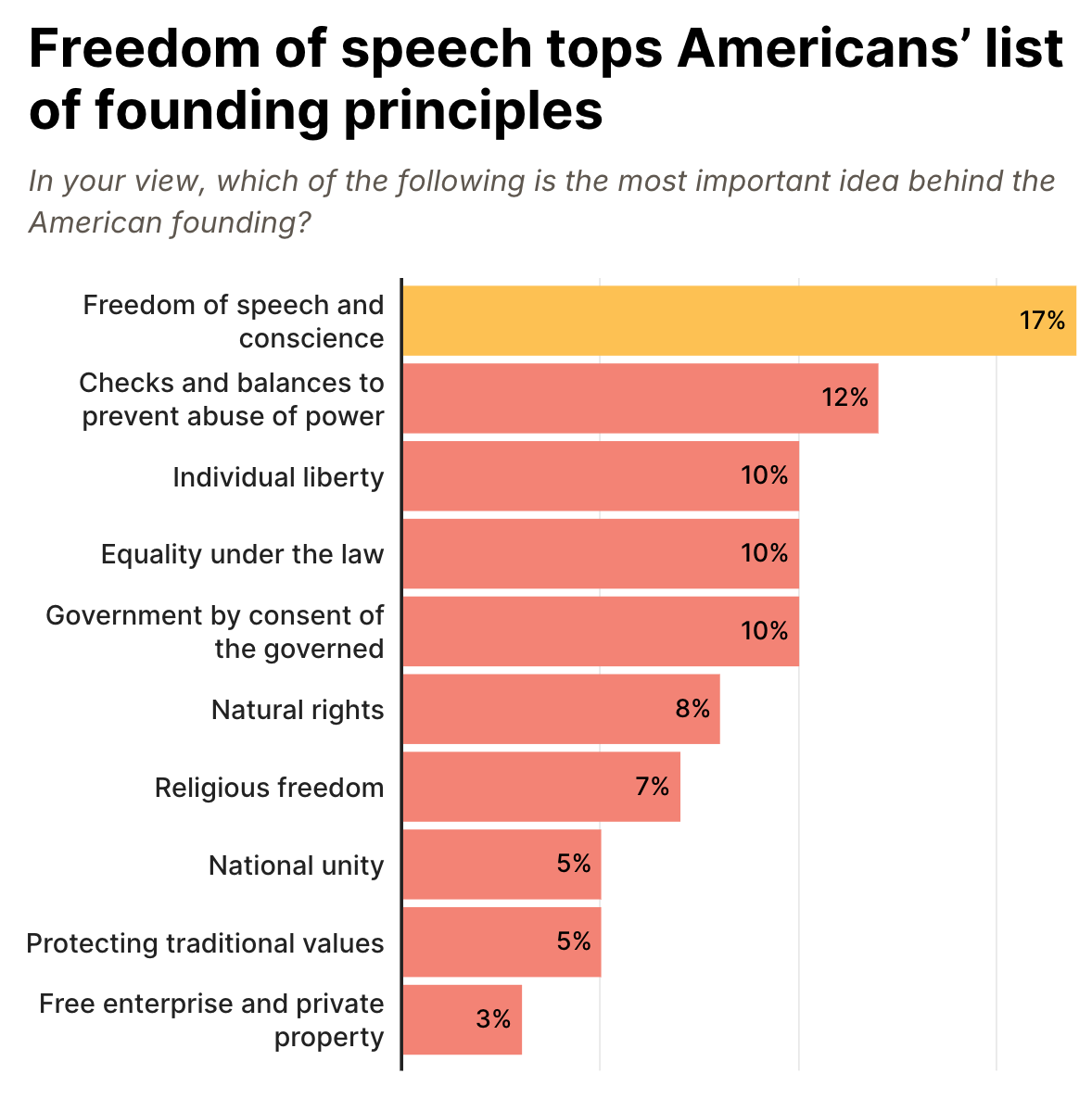
Freedom of speech tops the list of founding principles. Source: Cato Institute 2026 4th of July National Survey.
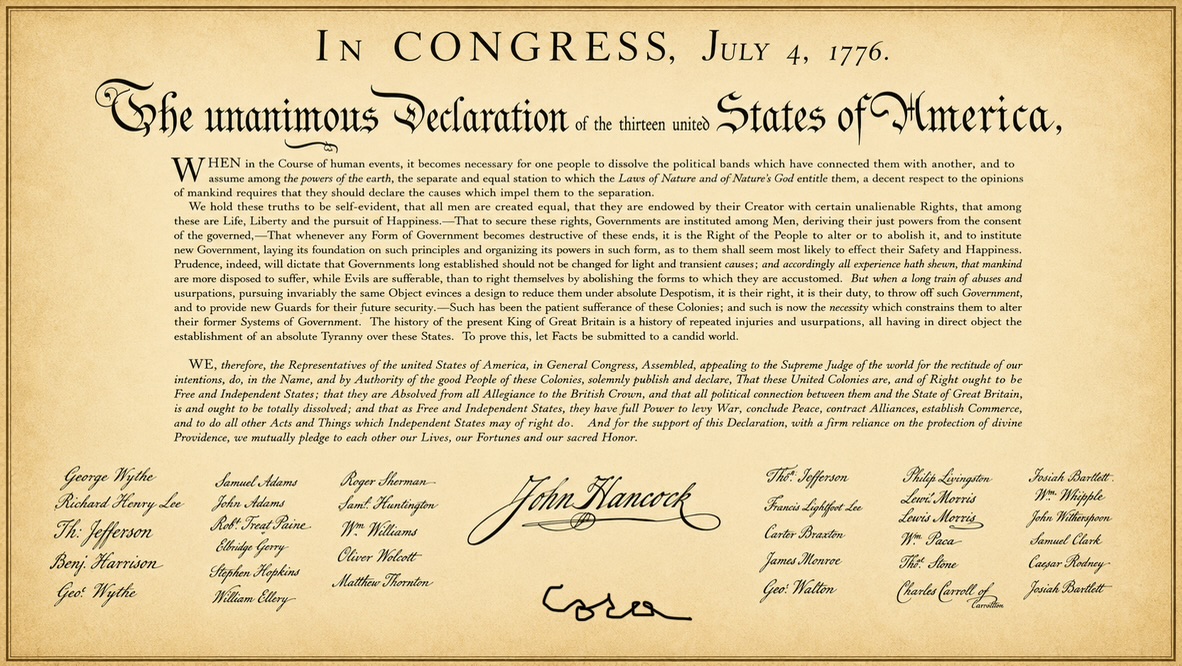
We hold these truths to be self-evident, that all men are created equal, that they are endowed by their Creator with certain unalienable Rights, that among these are Life, Liberty and the pursuit of Happiness.
Here’s how to unpack it so a child actually gets it — and why the third phrase is the one worth spending the most time on.
Start with “unalienable,” not with the three rights
The three rights are the famous part. The load-bearing word is the one right before them.
The document itself — worth putting in front of kids at full size.
Unalienable means a right can’t be taken away or given away — it isn’t a privilege someone hands you, and it isn’t something you can lose by being unpopular or outvoted.
The kitchen-table version: “A privilege is something Mom gives you and Mom can take back. A right is something that was already yours before Mom got here.”
Ask your child to sort a list into privileges and rights: dessert, your turn on the tablet, being told the truth, staying up late, not being hurt by someone bigger than you. The sorting argument is the lesson. Kids feel the difference between “you get this because someone allows it” and “this was yours to begin with” much faster than they can define it.
Life
The most concrete of the three, and the easiest to teach: your life belongs to you. Nobody — not a king, not a government, not the biggest kid on the playground — gets to decide you don’t get to have it.
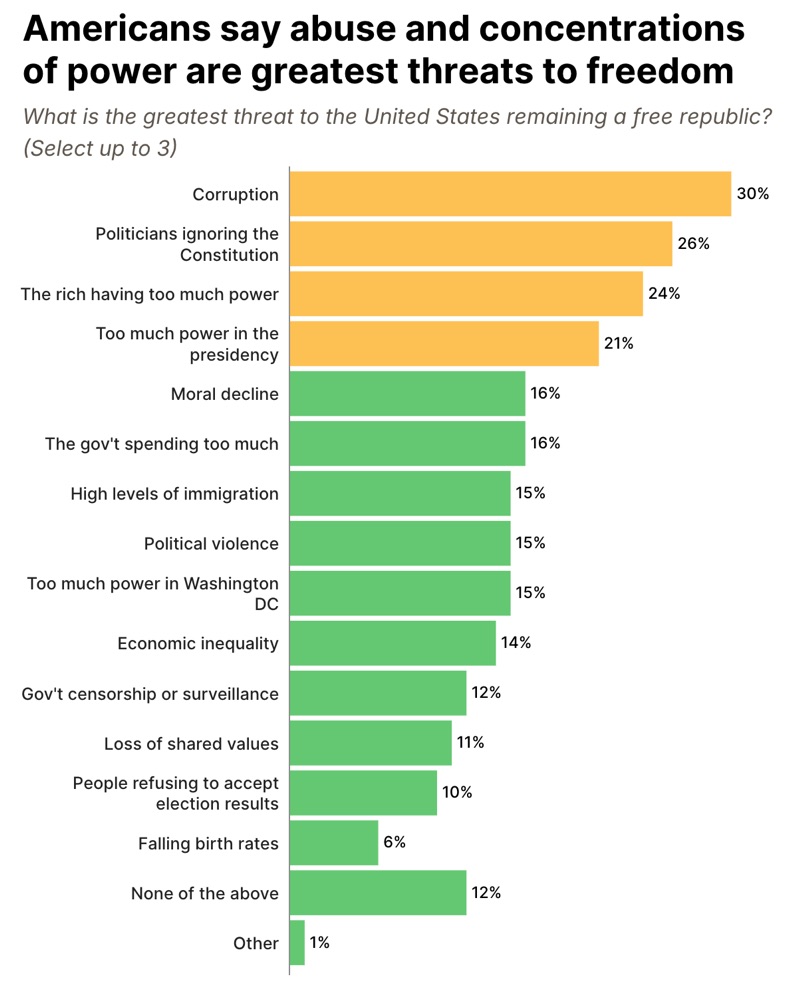
Concentrated power tops the list of perceived threats — the exact worry the founders built around. Source: Cato Institute 2026 4th of July National Survey.
For younger children, that’s enough. For older ones, it’s the natural place to talk about why the founders’ generation cared so much about a distant government with soldiers and no accountability.
Liberty
Liberty is not “do whatever you want.” That’s the misunderstanding that makes the whole idea look silly, and kids will land on it immediately if you let them.
Try this instead: liberty is being free to make your own choices — and being responsible for them. The two halves are welded together. Free people are people who answer for what they choose.
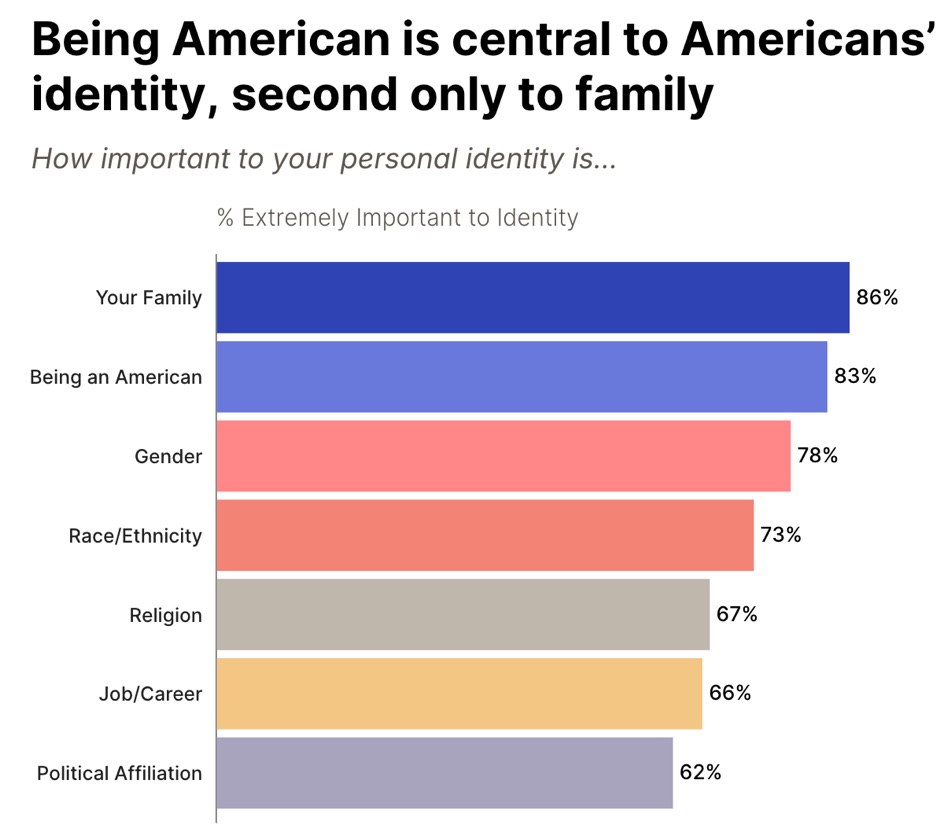
Being American ranks second only to family in personal identity. Source: Cato Institute 2026 4th of July National Survey.
A question that works: “Would you rather be free and have to make hard decisions, or have somebody else decide everything for you so it’s never your fault?” The hesitation before they answer is the whole point. Sit in it. Don’t resolve it for them.
The pursuit of happiness — the part everyone gets wrong
This one causes the most confusion, and it’s the one worth the most time.
Kids hear “happiness” and think fun: presents, candy, screen time. In 1776 the word carried more weight. It meant something closer to a life well lived — doing worthwhile work, becoming a good person, building something that lasts.
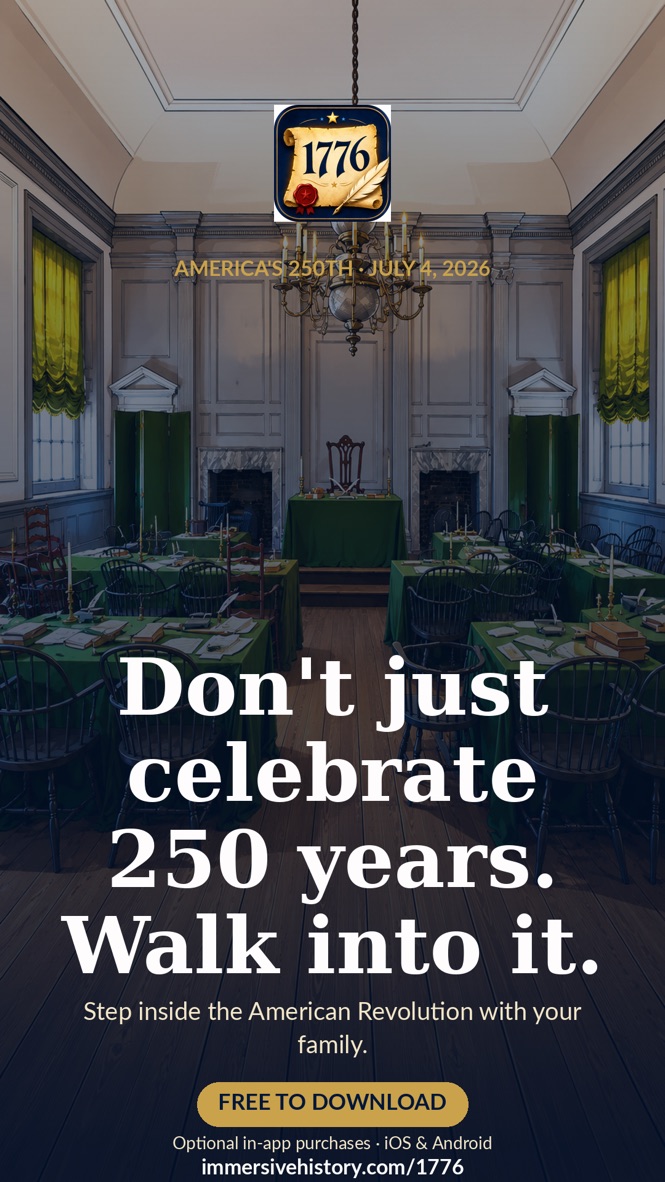
Don’t just celebrate 250 years — walk into it.
And notice the verb. Jefferson didn’t write that you have a right to happiness. He wrote that you have a right to pursue it.
The distinction, in kid terms: “Nobody owes you a good life. But nobody gets to stand in the way of you building one.”
That’s a surprisingly bracing idea for a nine-year-old, and it tends to stick. It’s also the point at which the Declaration stops sounding like a document and starts sounding like it’s about them.
Age by age
Ages 5–7. Skip the vocabulary. Three sentences: You get to be alive. You get to make choices. You get to work toward a good life. Then point out that a long time ago, a lot of people were told the opposite.
Ages 8–10. Introduce unalienable, and run the privileges-versus-rights sorting game. Read the actual sentence aloud from the Declaration — the real words, not a paraphrase. Kids can handle more archaic language than we assume when someone reads it to them.
Ages 11–13. Ask the harder question: the men who wrote “all men are created equal” did not live up to it, and many of them enslaved people. Was the sentence therefore worthless? Frederick Douglass answered no — he argued the words were a promise the country had made and would eventually be held to. That’s a real conversation to have with a middle schooler, and it’s more honest than either “the founders were perfect” or “the founders were frauds.”
The mistake to avoid
Don’t teach these as vocabulary words to be memorized for a quiz. The phrase is famous because people disagreed about it, fought over it, and were later held to it. Teaching it as a definition drains out everything that made it worth writing.
Argue about it a little. Let your child push back. A kid who has debated what “liberty” means at the dinner table understands it far better than one who can define it correctly on a worksheet.
Let them stand in the room
There’s a difference between reading that Jefferson wrestled over the wording and being the one who helps him choose it.
That’s why we built 1776. Kids walk into Independence Hall, meet the founders, work through the wording of the Declaration alongside Jefferson, and sign it themselves. The words stop being a quotation on a poster and start being something they had a hand in.
It’s live on iPhone and Android — one-time $5 unlock, no subscription, works for the whole family.