
There’s a moment that happens the first time a child reads something a real person actually wrote, in the words that person actually used, three hundred years ago.
They stop skimming. They frown. They say wait — and then they ask a question.
That moment is the entire reason to teach primary sources. Not rigor, not standards, not test prep. A textbook tells a child what happened. A primary source lets a child catch someone in the act.
What counts as a primary source
A primary source is something made by a person who was there. A secondary source is someone later telling you about it.
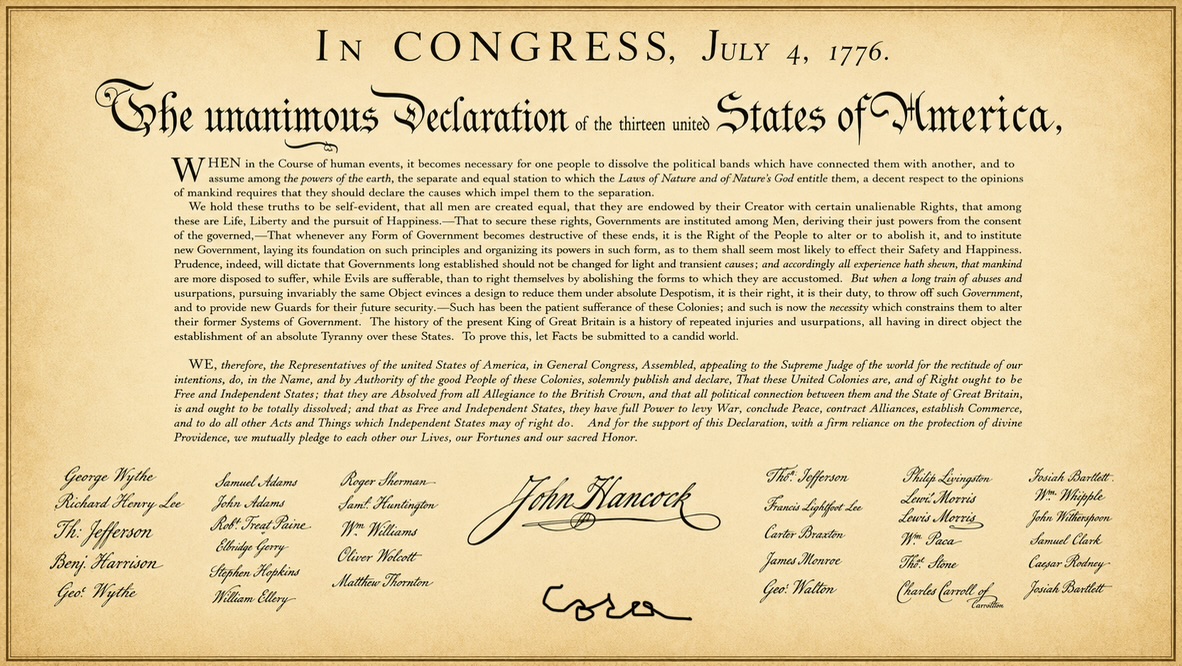
Primary: a letter, a diary, a speech, a newspaper from that week, a painting done from life, a ship’s manifest, a receipt, a photograph, a treaty, a court record, a will, a recipe, a shopping list.
Secondary: your textbook, a biography, a documentary, this blog post.
Both are useful. But only one of them can surprise you.
The easiest way to explain the difference to a seven-year-old: A primary source is a witness. A secondary source is someone repeating the story they heard. Kids understand instantly, because they have opinions about being quoted secondhand.
Why they matter more than they sound like they do
1. They restore the uncertainty. Textbooks are written backward, from a known ending. Everyone in a textbook seems to know how it turns out. Primary sources are written by people who had no idea — who were worried, wrong, hopeful, or asking their wife what she thought. That uncertainty is where the actual history lives.
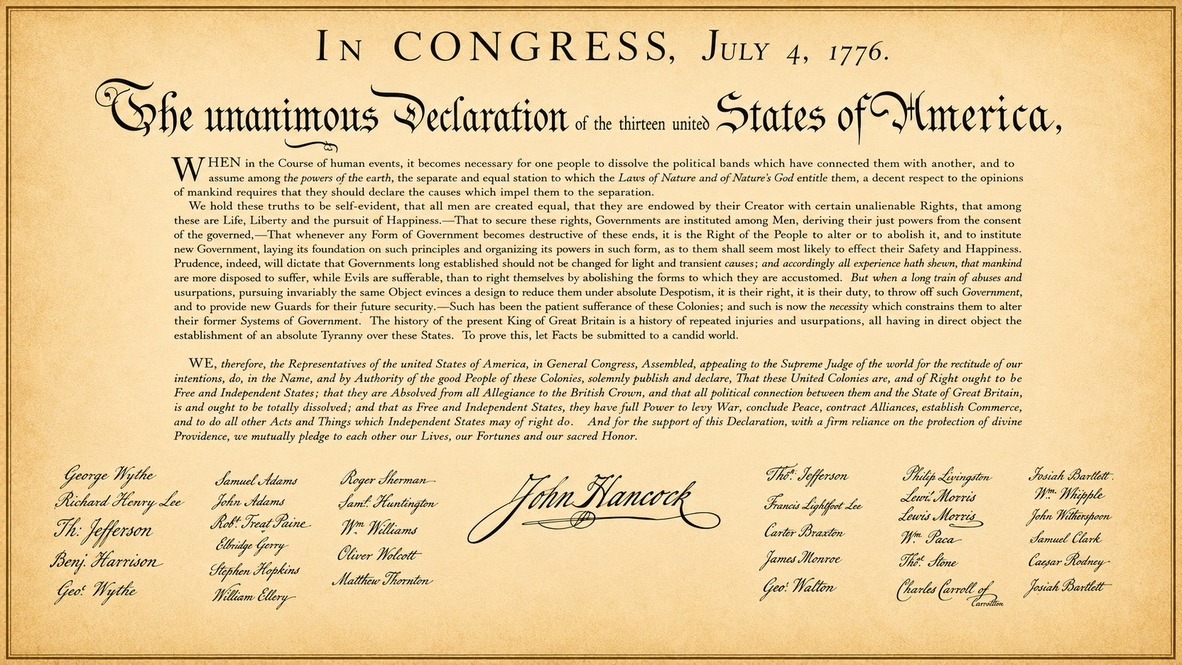
2. They make people real. Jefferson’s draft of the Declaration has words crossed out. Somebody made him change them. A child who sees the crossings-out learns something no summary can teach: this was written by a nervous person under deadline, not handed down on a tablet.
3. They teach a transferable skill. Who made this? When? Why? What did they want me to think? Those four questions work on a 1776 broadside and on a video a kid gets served tomorrow. You are not really teaching history. You are teaching a child to interrogate a source — which is the most useful thing they will learn this year.
4. They make a child an authority. When a kid reads the document themselves, they have standing. They can disagree with the textbook. That shift — from receiving history to arguing with it — is when a subject stops being homework.
The hard part: the language
This is where most families quit. Eighteenth-century English is genuinely difficult, and pushing through it out of duty is how you teach a child that primary sources are punishment.
Five things that work:
Read it aloud, badly, together. These documents were written to be read out loud. The rhythm carries meaning that the eye skips. Stumble through it; the stumbling is fine.
Take one paragraph, not one document. Nobody needs to read the whole Declaration in one sitting. The second sentence — “We hold these truths to be self-evident” — is worth a whole week by itself. Depth over coverage, always.
Translate together, don’t pre-translate. Hand them the real sentence, then ask: what do you think that means? Let them guess wrong. Guessing wrong and getting corrected by the text is the lesson. Handing them a modern paraphrase first skips it.
Let them see the handwriting. The Library of Congress, the National Archives, and DocsTeach all publish free high-resolution scans. A scan of the actual thing — smudges, weird long s‘s, crossings-out — hits differently than clean type. Kids lean in toward mess.
Stop before they’re done. End while they still have a question. The goal is that they come back.
Five questions that work on any document
Print these. They work on the Declaration, a Civil War letter, an immigration record, or a photograph.
- Who made this, and were they there?
- Who did they make it for? (A private diary and a public speech lie in different directions.)
- What did they want the reader to do or feel?
- What do they leave out?
- What surprises you?
Question five is the one children answer best and adults answer worst. Take it seriously — their surprise is usually pointing at something real.
Good first primary sources for the founding era
Start small and human, not monumental:
- Abigail Adams to John Adams, March 31, 1776 — the “remember the ladies” letter. Short, funny, sharp, and a child immediately grasps that she is teasing and serious at once.
- Jefferson’s rough draft of the Declaration — specifically the deleted passages. Ask why would they take that out?
- The Declaration’s grievance list — pick three. They read like a kid listing everything a sibling did wrong, which is exactly the right instinct.
- A colonial newspaper page — the ads next to the news do more to make 1776 feel inhabited than any paragraph about daily life.
- A muster roll or pension application — real names, real ages. Many soldiers were fifteen.
A ten-minute version, for a Tuesday
You do not need a unit study. You need ten minutes:
- Show the scan. Say nothing about it.
- Ask: what do you notice? Wait longer than is comfortable.
- Read one sentence aloud together.
- Ask: what do you think this person was worried about?
- Stop.
That’s a complete lesson. Do it eleven times and your child has a habit.
What this looks like when it goes well
A child who has read a real document tends to do a specific thing later: they push back. They say the textbook made it sound simpler than it was. They remember that somebody crossed something out.
That is not a small outcome. It’s the difference between a child who knows what happened and a child who knows that people made it happen, on purpose, while unsure — which is the only version of history that’s any use to them when it’s their turn.
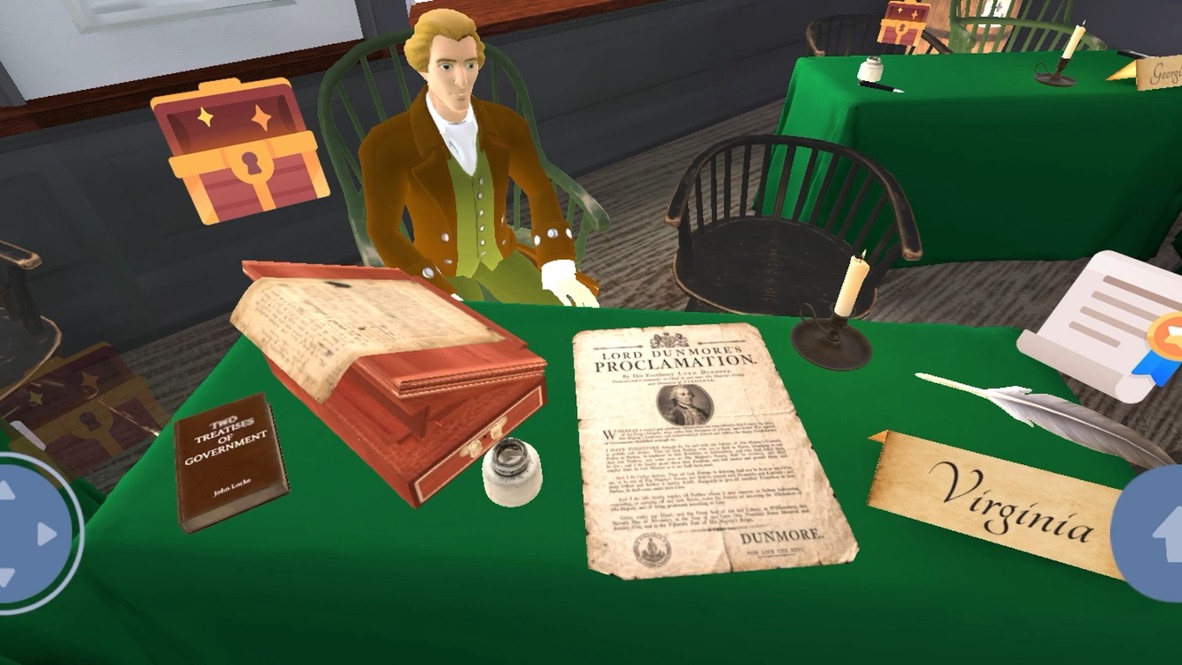
A note on how we teach this. Our app 1776 was built on exactly this idea. Kids don’t read about the Declaration — they walk into Independence Hall, meet the delegates, work through the actual wording with Jefferson, argue about what stays and what goes, and sign it themselves. The document becomes something they helped make, not something they were handed.
It’s available on iPhone and Android — one $5 unlock, no subscription. See it here.