

Most kids meet Benjamin Franklin as a punchline: the old guy with the kite and the key. It’s a shame, because the kite is nowhere near the most interesting thing about him — and the version of Franklin that actually holds a child’s attention is the one nobody teaches.
He was a runaway.
The short version
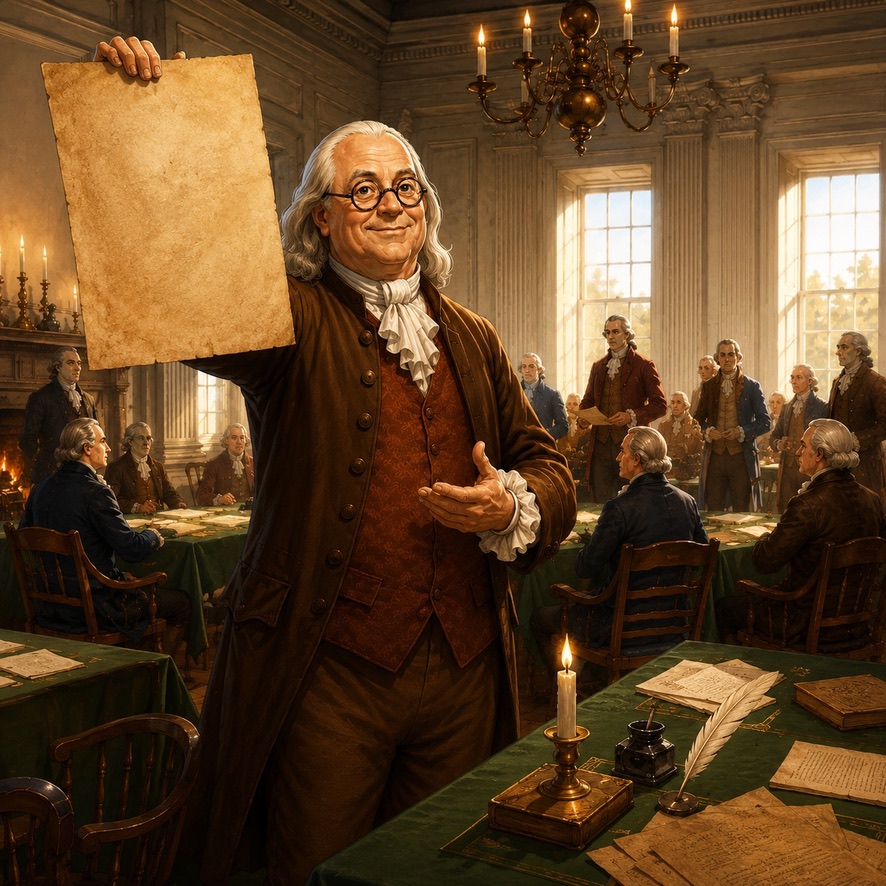
Benjamin Franklin was born in Boston in 1706, the fifteenth of seventeen children. His family could only afford two years of school for him. At twelve he was apprenticed to his older brother James, a printer, which in practice meant years of unpaid work and a fair amount of getting hit.
At seventeen, he broke the apprenticeship — illegally — and ran. He arrived in Philadelphia with almost no money, bought three puffy rolls because he didn’t know what else to ask for, and walked up Market Street eating one with the other two under his arms. He said later that a girl watching from a doorway thought he looked ridiculous. He married her seven years later.
By the time he was forty-two, he had made enough money as a printer to retire and spend the rest of his life on science, invention, and public argument.
What he was like
Kids remember specifics, so here are the ones that land:
- He wrote under fake names. At sixteen, banned by his brother from writing for the paper, he invented a middle-aged widow named Silence Dogood and slipped her letters under the print-shop door. They ran. His brother had no idea.
- He never patented anything. He invented the lightning rod, a better woodstove, and bifocals — and refused patents on all of them, saying that since we benefit from other people’s inventions, we should be glad to serve others with ours for free.
- He started things. The first lending library in America. A volunteer fire company. A hospital. A university. A postal system that worked.
- He kept a chart of his own faults. Thirteen virtues, tracked daily with a pen, trying to fix one per week. He admitted in his autobiography that he never got through the list cleanly. Order defeated him entirely.
That last one is worth reading aloud. A child who thinks great people were simply born good will not try. A child who learns that Franklin kept score on himself and still lost most weeks might.
The kite, honestly
Yes, he flew a kite in a thunderstorm in 1752 — probably. The details come mostly from Franklin’s own account written years later, and historians argue about it. What is not in doubt is what he proved: that lightning is electricity, not a mysterious act of judgment. And what he did next is the part that mattered. He turned the discovery into the lightning rod, which stopped buildings from burning down.
That’s the shape of nearly everything he did: notice something, test it, then make it useful to ordinary people.
Franklin in 1776
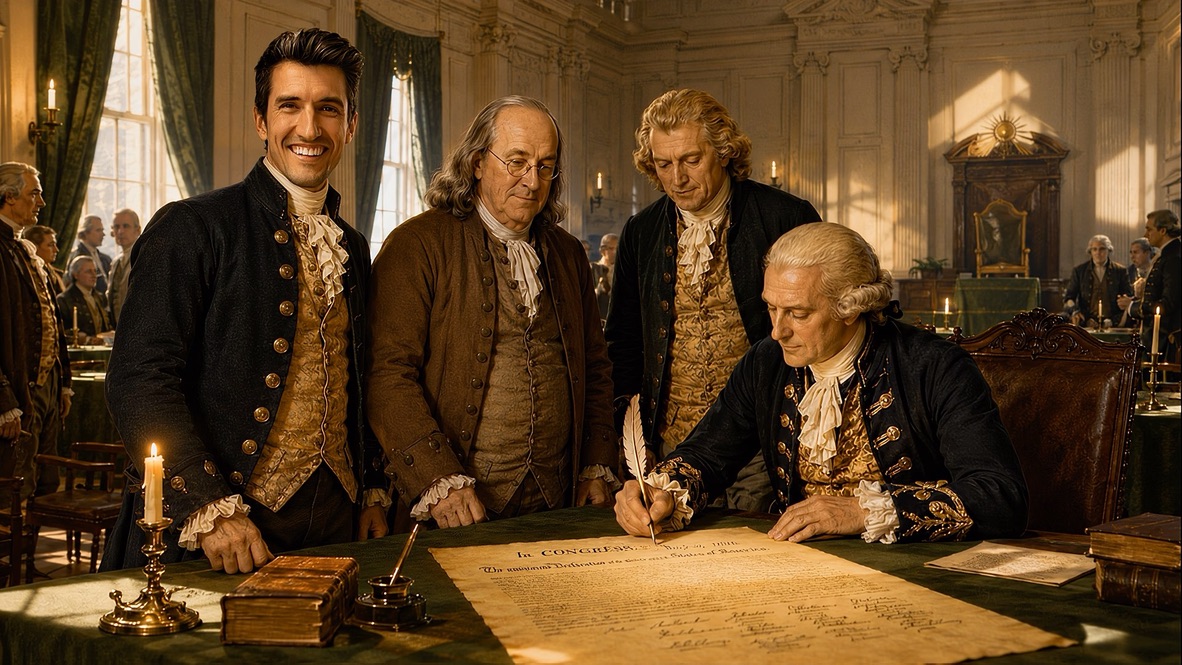
By July 1776 Franklin was seventy years old — a full generation older than nearly everyone else in the room. Jefferson was thirty-three. Adams was forty. Franklin had been world-famous for decades before most of them were adults.
He sat on the Committee of Five that produced the Declaration, and he was the one sitting beside Jefferson while Congress cut roughly a quarter of Jefferson’s draft in front of him. Jefferson was miserable. Franklin leaned over and told him a long, funny story about a hatmaker who let his friends edit his shop sign until nothing was left but his name and a picture of a hat.
It’s the perfect Franklin moment: he could not stop the editing, so he made a young man feel better about being edited.
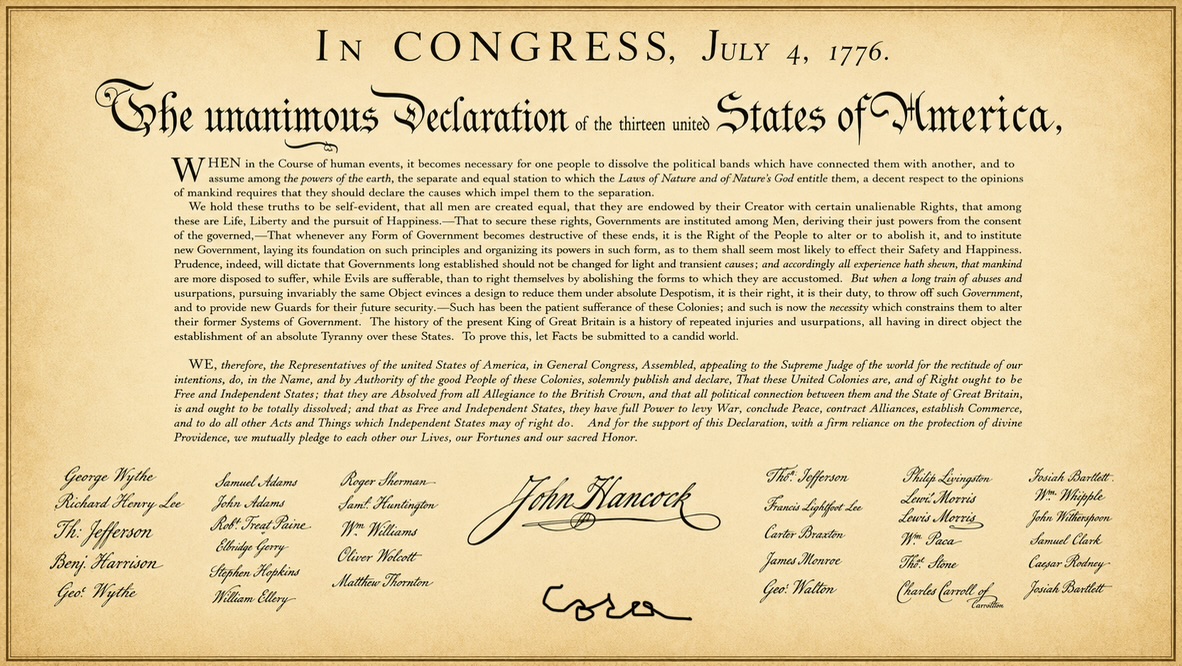
He was also gravely ill that summer — carried to some sessions in a sedan chair — and he signed anyway. The line attributed to him at the signing, “We must all hang together, or assuredly we shall all hang separately,” may be legend, but the risk behind it was not. Signing was treason.
After that, at seventy, he sailed to France and spent nearly nine years talking the French into funding the American war. There is a strong argument that America does not win without that trip.
How to talk about the hard parts
Franklin owned enslaved people for much of his life, and he printed advertisements for slave sales in his newspaper. Late in life he changed his mind, became president of an abolition society, and one of the last public things he did was petition Congress to end slavery. Congress refused to consider it.
Both facts are true and children can hold both. The useful question isn’t “was he good or bad?” — it’s “what made him change his mind, and why did it take so long?” That question is worth more than a verdict.
Five questions to ask after the reading
- Franklin ran away from a job he’d promised to do. Was he right to?
- Why would someone refuse to patent an invention that would have made him rich?
- He tracked thirteen habits and failed at most of them. Is that a failure?
- Why send a seventy-year-old man across an ocean instead of a young one?
- What would you put on a list of thirteen things to get better at?
Make it something they walk into
Franklin is hard to teach from a page, because what made him remarkable was the way he moved through a room — curious, funny, useful, and about thirty years older than everyone else in it. That doesn’t compress into a paragraph.
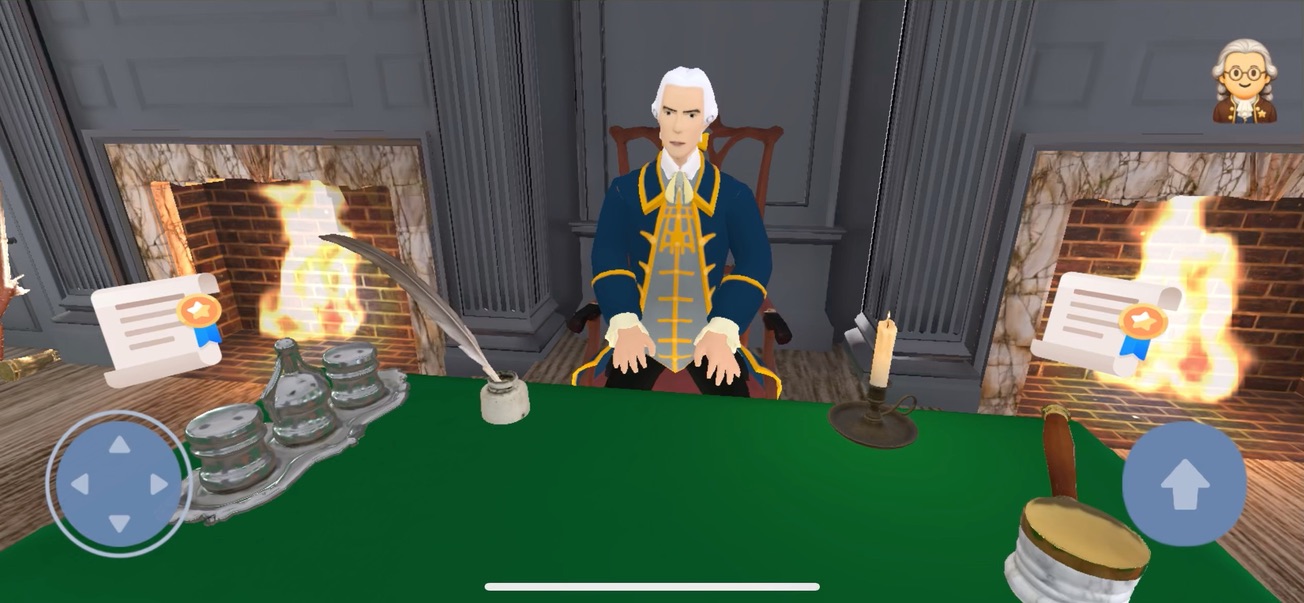
That’s why we built 1776. Kids step into Independence Hall, meet the founders, work through the wording of the Declaration with Jefferson, and sign it themselves. It’s a one-time $5 unlock on iPhone and Android — no subscription — and it pairs naturally with any founding-era unit study in this 250th school year.
Jarom Sidwell spent years in Hollywood visual effects production (Avatar, The Avengers) before founding Immersive History. 1776 lets kids step into Independence Hall, meet the founders, help draft the Declaration, and sign it themselves — available now on iPhone and Android.