

Ask ten parents what civics is and you’ll get ten answers. Some say it’s the three branches of government. Some say it’s voting. Some say it’s the Pledge of Allegiance. A few say — with a certain wariness — that it’s the subject where somebody else’s politics get taught to their kid.
All of that is worth taking seriously, including the wariness. So it’s worth starting with a definition narrow enough to be useful.
Civics is the study of how a people governs itself, and citizenship is the practice of taking part in it. One is knowledge. The other is a habit. Most civics instruction teaches the first and quietly hopes the second happens on its own.
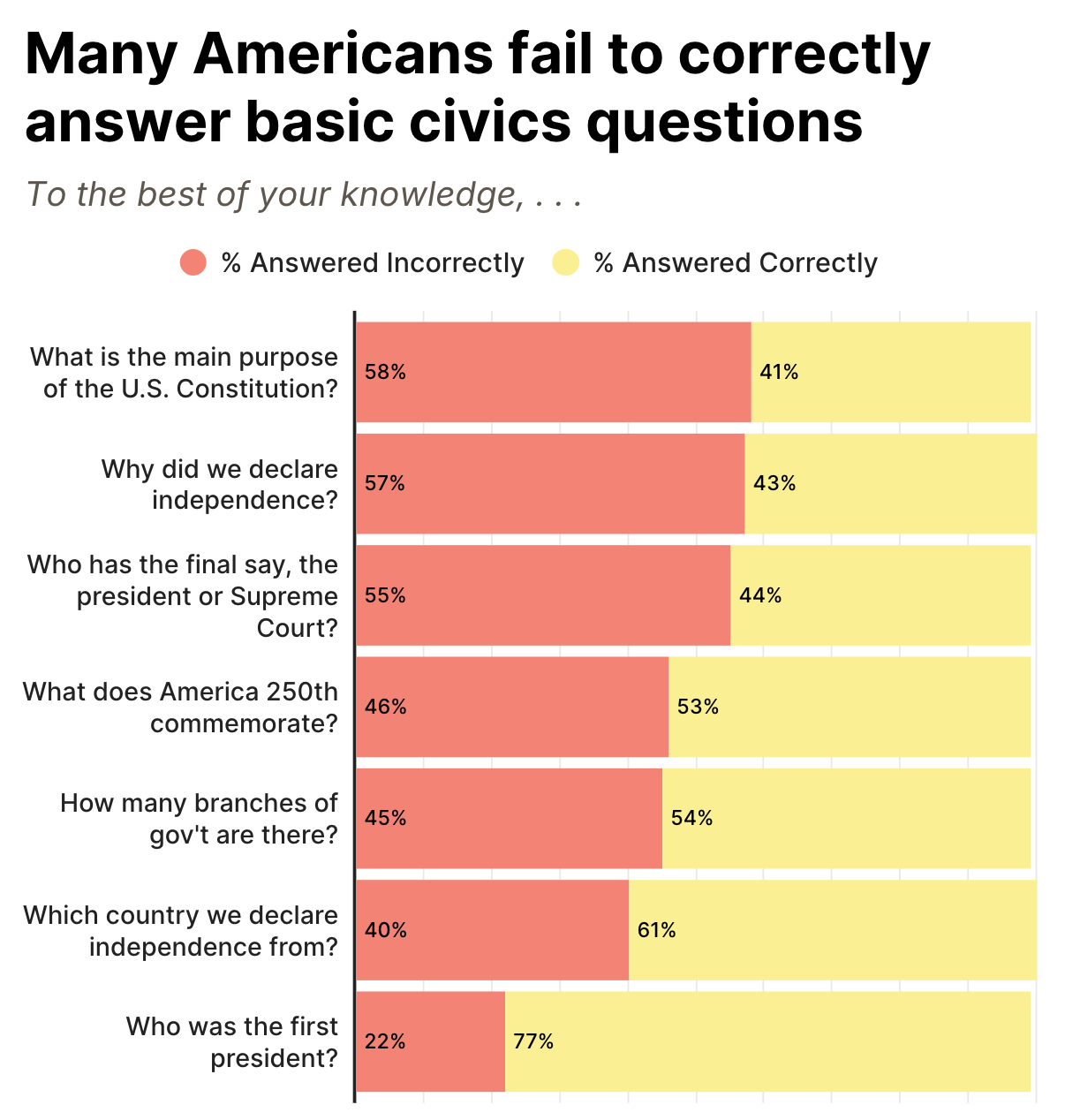
The 250th year is an unusually good moment to teach both, and not because anniversaries are inherently educational. It’s because for the next eighteen months the country will be doing the thing you’re trying to explain — arguing about its own founding, in public, on a schedule. That’s a live text.
Why this year is different
Most years, teaching civics means asking a child to be interested in a process that is invisible to them. This year the process comes with dates attached:
| Date | What it is | The civics question it raises |
|---|---|---|
| Sept 17, 2026 | Constitution Day | Why write the rules down at all? |
| Nov 3, 2026 | Election Day | How does a country change its mind without fighting? |
| Nov 11, 2026 | Veterans Day | What does a citizen owe? |
| Dec 26, 2026 | 250th of Washington crossing the Delaware | What do you do when you’re losing? |
| Jan 3, 2027 | 250th of Princeton | Why did anyone keep going? |
| July 4, 2027 | Independence Day | What were we actually declaring? |
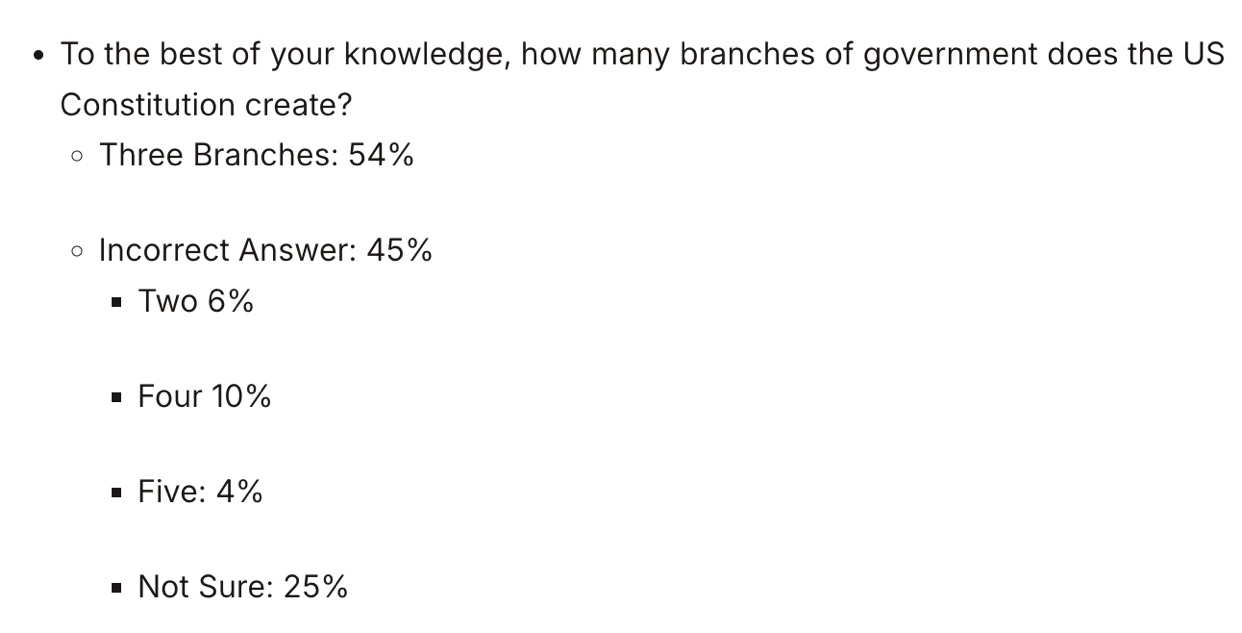
A dated question lands differently than an abstract one. “How does a bill become a law” is a diagram. “The country is voting in nine weeks — how is it deciding?” is a conversation.
What kids can actually hold at each age
The single most common mistake in civic education is teaching structure before children have any reason to care about structure. Branches, checks, and balances are answers. If a child hasn’t felt the problem, the answer is just vocabulary.
Ages 5–7 — fairness and rules. No government yet. The material is the playground: Who decides? What happens when the person deciding is also playing? What makes a rule fair instead of just enforced? Children this age have strong, sophisticated instincts about fairness and almost no patience for institutions. Work with the instinct.
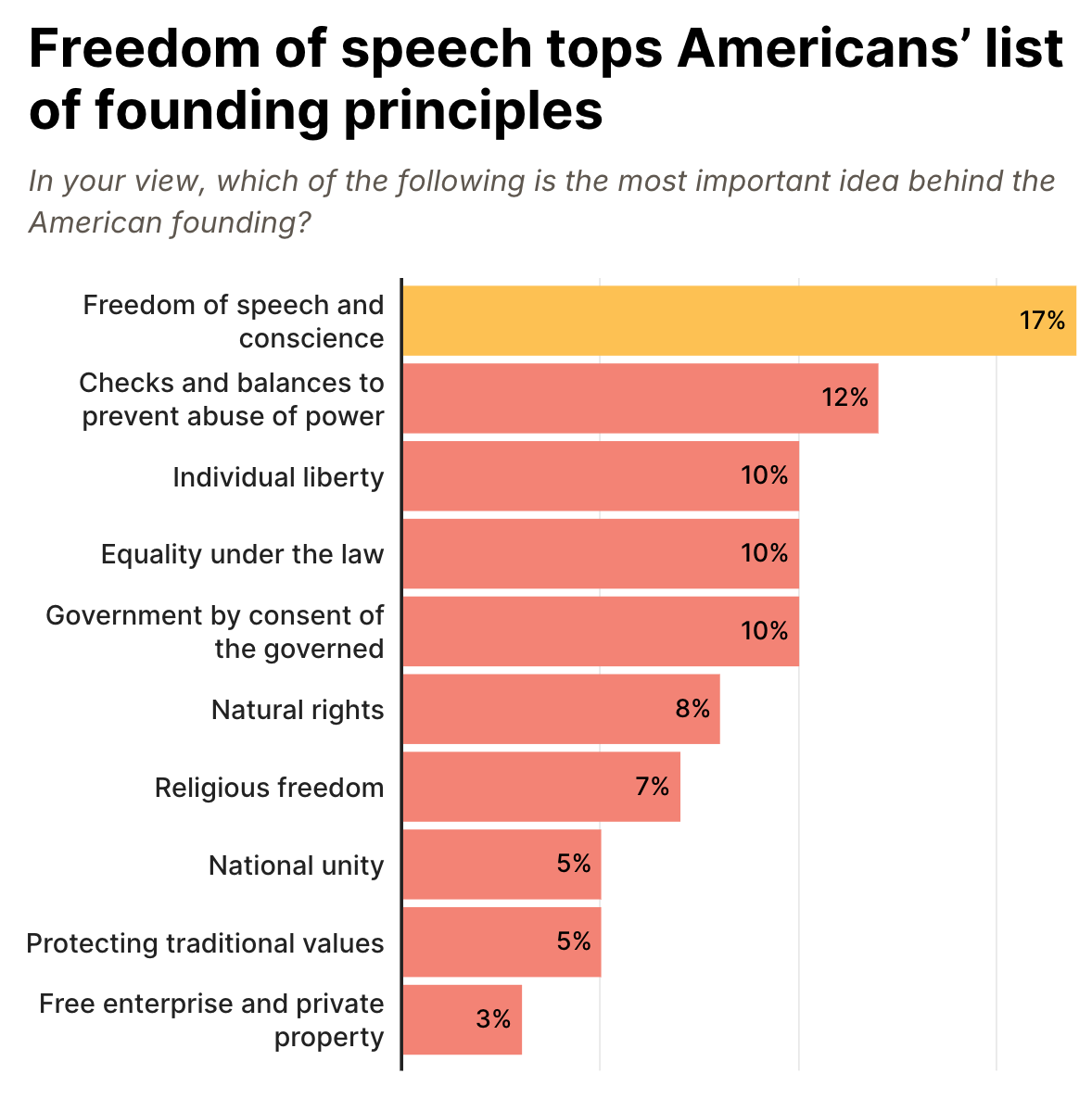
Ages 8–10 — people and stories. Now the founders become useful, as people who disagreed. Franklin and Adams did not like each other much. Jefferson wrote a passage condemning the slave trade and the Congress cut it. The Declaration went through draft after draft because a roomful of people argued over the wording. That’s the real lesson: self-government is what disagreement looks like when nobody is allowed to win by force.
Ages 11–13 — mechanism. Structure finally makes sense, because they’ve seen the problem it solves. Separation of powers is no longer trivia; it’s an answer to “what stops the person in charge?” This is the age for the Constitution itself, the Great Compromise, and the Bill of Rights as a list of things somebody was specifically afraid of.
Ages 14+ — argument. Read the disagreements straight: Federalist and Anti-Federalist, in their own words. The goal here isn’t to land on a conclusion. It’s for a teenager to be able to state the strongest version of a position they don’t hold — the single most valuable civic skill there is, and the rarest.
Teaching it without teaching your politics
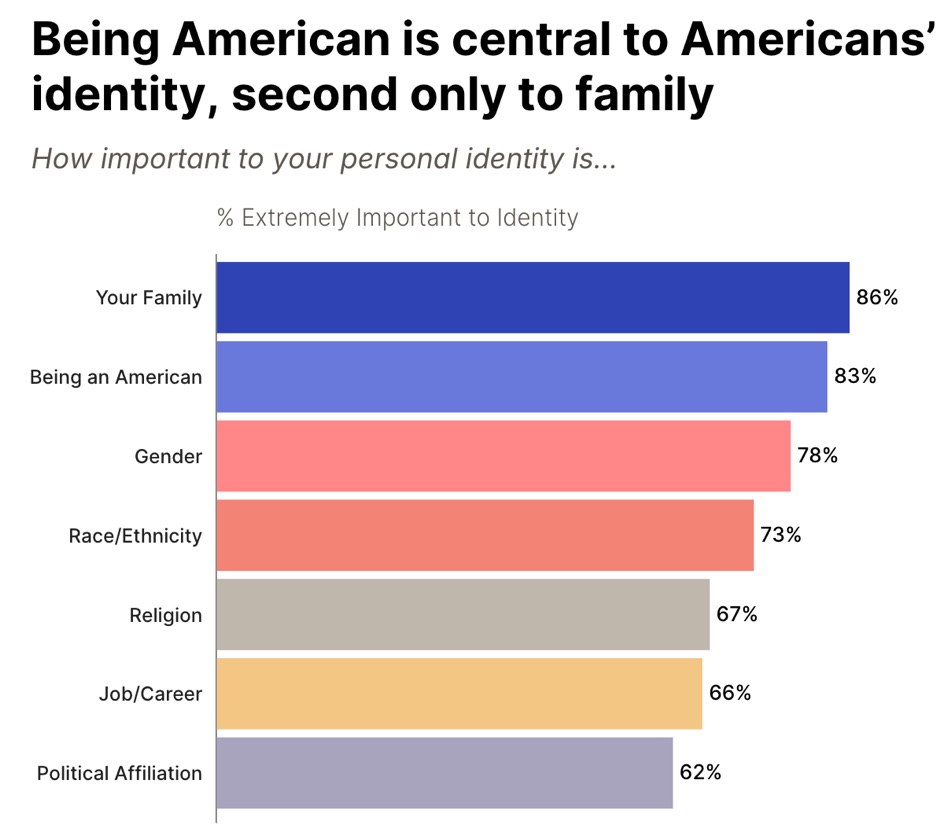
This is the part parents ask about most, so here is the honest version.
You cannot teach civics from nowhere. Every choice of what to include is a judgment. But there is a real and workable difference between teaching a child what to think and teaching them how the argument works, and it comes down to a few habits:
- Teach the disagreement, not just the outcome. Almost everything in the founding was contested by serious people. A child who learns only the winning side learns that history was obvious, which is the opposite of civic thinking.
- Use the primary source when it exists. “Here is what he actually wrote” ends more arguments than any summary.
- Say plainly when the country failed its own words. “All men are created equal” was written by a man who held people in slavery. Children can hold this. What they cannot hold is discovering later that you left it out — that’s what makes a kid distrust everything else you taught them.
- Distinguish facts from judgments out loud. “The Constitution gives Congress the power to declare war” is a fact. “Congress should use it more” is a judgment. Name which one you’re doing.
- Let them disagree with you. A child who can argue with a parent respectfully has already learned the thing.
Loving your country and telling the truth about it are not in tension. They’re the same skill, applied to a nation instead of a family.
Citizenship is a habit, not a unit
Knowledge is the easy half. The practice matters more, and it’s smaller than people expect. A few things that actually work:
- Attend one public meeting. A school board, a city council, a town hall. Twenty minutes of watching adults disagree procedurally teaches more than a chapter.
- Write one real letter. To a representative, a mayor, a local paper. It doesn’t have to be about anything large. The lesson is that the channel exists and that a person on the other end reads it.
- Serve once, visibly. A cleanup, a food bank, a neighbor’s yard. Citizenship starts as a habit of noticing that something needs doing.
- Vote in something. A family decision, a co-op choice, a class election — with real stakes and a real count, including the part where your side loses and the outcome still holds. That last part is the lesson.
- Read one news story together to the end, and ask what the other side would say.
Five habits, spread over a year. That’s a civic education.
A year anchored to the calendar
If you want a spine rather than a curriculum:
September — Constitution Day (Sept 17). The Declaration says why; the Constitution says how. Sort powers into three branches. Re-run the Great Compromise as a debate: should a big state and a small state get the same say? Federal law requires every school receiving federal funds to hold an educational program on Sept 17, so if your children are in school, ask what they did — and if you’re homeschooling, an hour covers it well.
October–November — how a country decides. Election season, used as the text. What is a primary? Why do we vote in districts? What does it mean to lose gracefully?
December — the low point. Dec 26, 2026 is the 250th anniversary of Washington crossing the Delaware. The army was falling apart and enlistments expired in five days. This is the best story in American history for a hard week, and it’s a civics lesson too: the men who re-enlisted were choosing something.
January–March — the rules themselves. The Constitution, the Bill of Rights, the amendments that came later. The Nineteenth and the Thirteenth belong here, in the same breath as the original text.
April–June — the argument continues. Federalist vs. Anti-Federalist for older kids; “who decides?” revisited for younger ones. End the year where you started, with a harder version of the same question.
Where an immersive experience helps
Everything above is reading, talking, and doing — which is most of it. But there’s one gap that’s genuinely hard to close with a book: children have no felt sense of the room. The Declaration reads like a monument. It was a document argued over by tired men in a hot hall in Philadelphia who did not know it would work.
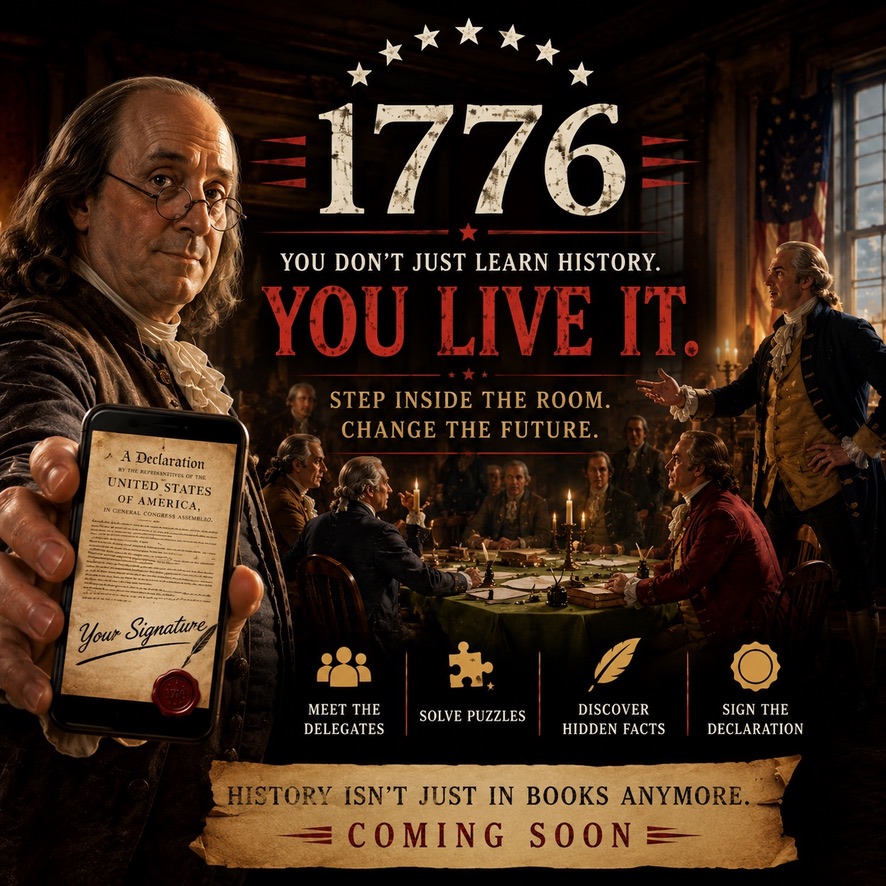
That gap is why we built 1776. Kids walk into Independence Hall, meet the founders, work through the wording of the Declaration with Jefferson, and sign it themselves. It’s not a substitute for the reading — it’s the thing that makes a child want the reading, because they were standing there when it happened. It’s on iPhone and iPad with a one-time $5 unlock, and there’s a free tier so you can see it before you decide.
For Constitution Day specifically, we’re giving classroom access away free. If you run a co-op, a classroom, or a homeschool group, get in touch — that’s a give, not a pitch.
The one thing to keep
If you keep a single idea from all of this, keep the one from the middle: teach the disagreement.
A child who learns that the founding was inevitable learns nothing usable. A child who learns that it was argued, drafted, compromised, nearly lost, and then chosen anyway — that child has been handed the actual instrument. Self-government isn’t a structure you inherit. It’s an argument you’re now part of.
That’s the citizenship half. It’s the half that lasts.