

The short answer: earlier than most parents think — but not in the way most curricula do it.
A five-year-old is not too young to meet George Washington. A five-year-old is too young for the Stamp Act. The question isn’t really when, it’s what part. Kids can hold a person long before they can hold a political argument, and the founders are people first.
Here’s how it actually breaks down.
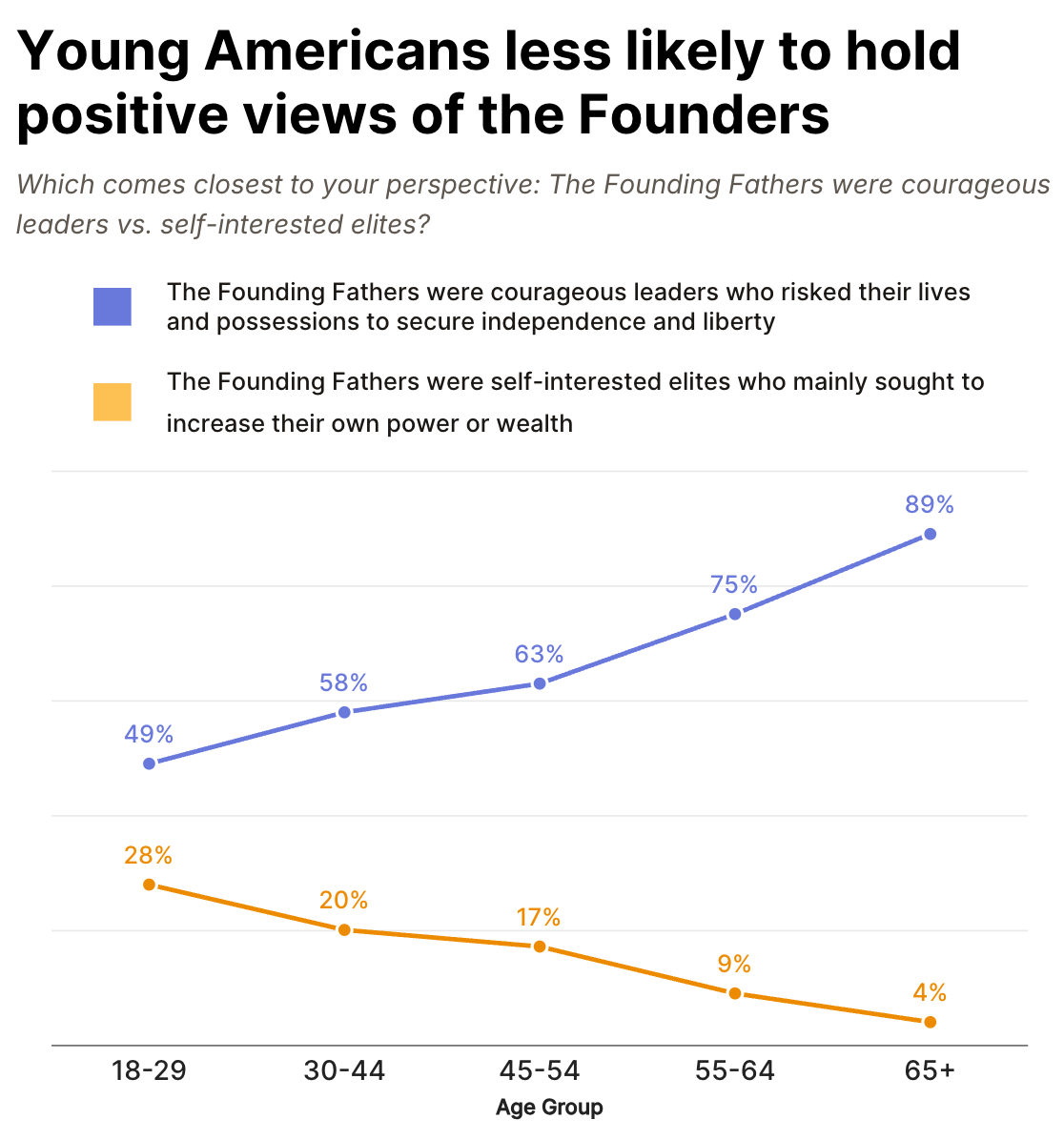
Ages 4–6: People, not politics
At this age a child’s history hook is character and story. Not causes. Not dates. Not “taxation without representation.”
What works:
- One person at a time. Washington. Franklin. That’s plenty for a year.
- A single vivid image per person. Washington crossing an icy river at night. Franklin flying a kite in a thunderstorm and writing down what happened.
- Concrete virtues they already understand — brave, honest, curious, stubborn. A five-year-old has strong feelings about fairness. Lead with that.
What to skip: the war, the politics, the moral complexity. There’s time.
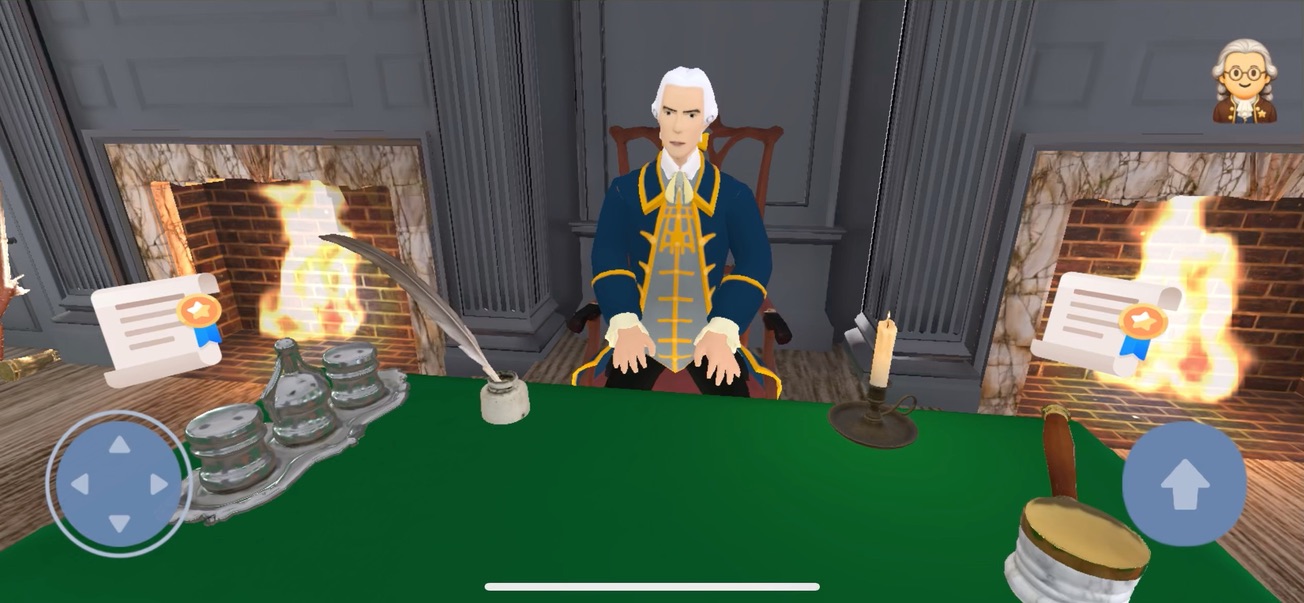
A good test: can your child tell someone else the story at dinner? If yes, it landed. If they can only answer your questions, it didn’t.
Ages 7–9: The big idea, in one sentence
This is the sweet spot, and it’s the age most families under-aim at.
Second through fourth graders can absolutely hold the central idea of the Declaration of Independence, as long as you give it to them in a sentence they’d say out loud: the people in charge don’t get to be in charge just because they were born into it — and if a government stops protecting people’s rights, the people can change it.
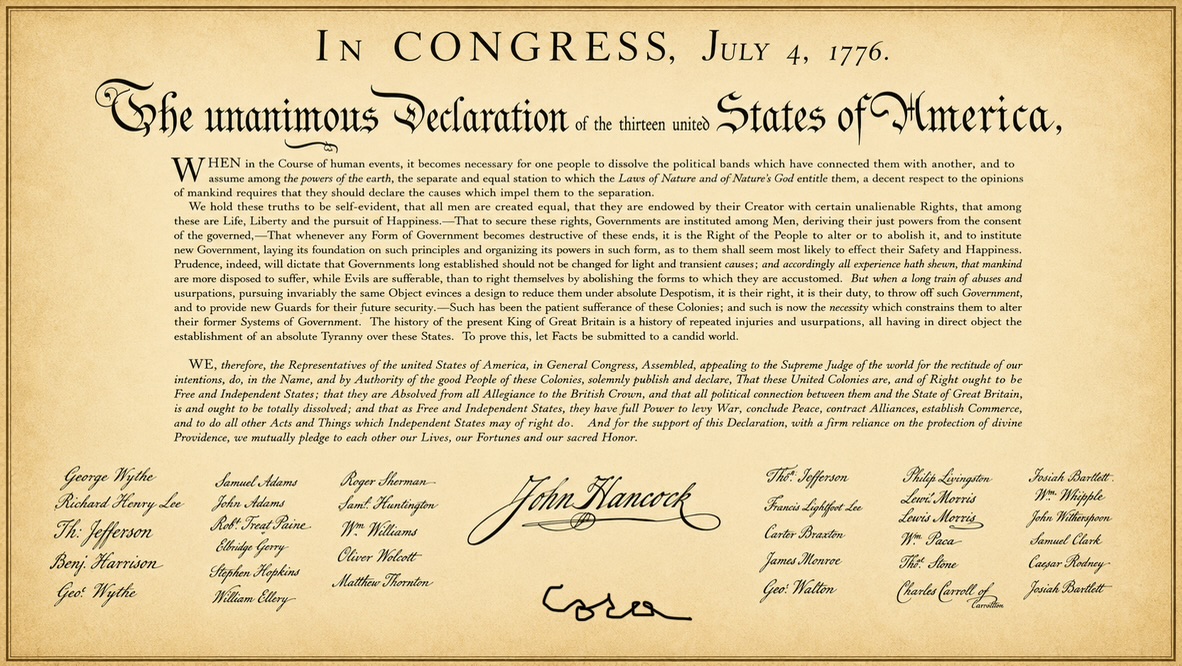
That’s it. That’s the revolution.
What works at this age:
- The moment of decision. Fifty-six men signed a piece of paper that could have gotten them hanged. Kids feel that. Ask them: would you have signed?
- Disagreement between founders. Adams and Jefferson argued constantly and later became friends again. Kids find this fascinating — it’s a schoolyard dynamic they recognize.
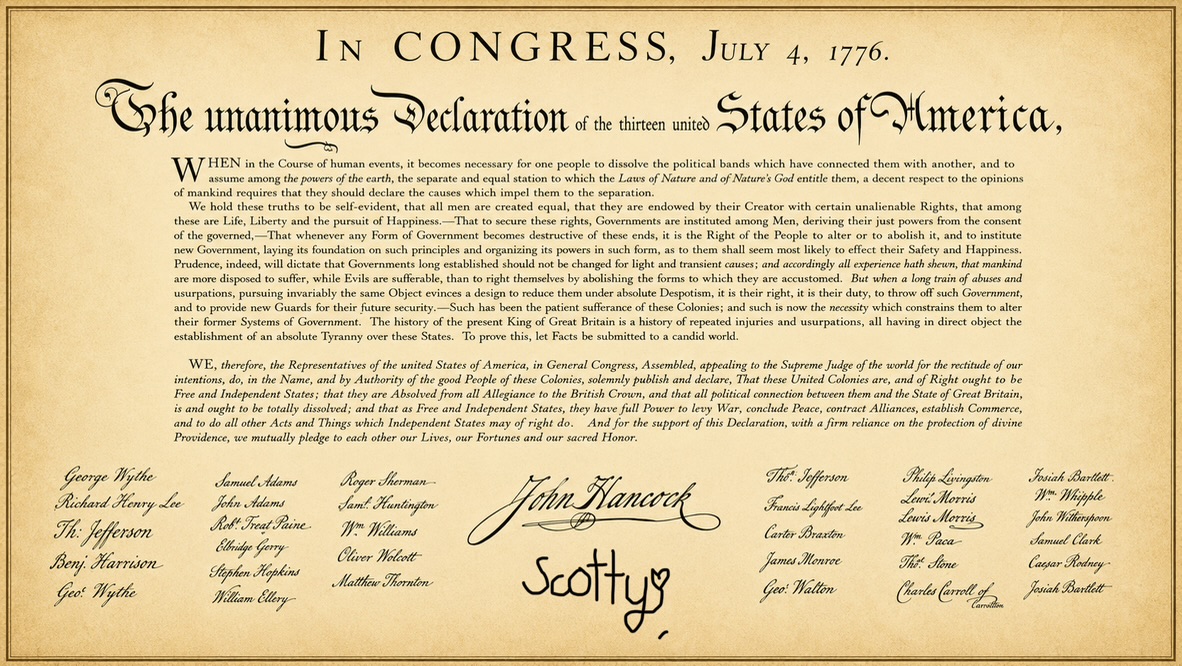
- Doing something with your hands. Copywork of a single line. A quill and ink. Signing their own name the way John Hancock did.
- Role-play. “You’re in the room. Jefferson just read his draft. What would you change?”
What to introduce carefully: slavery. Around 8 or 9, most kids can hold “he wrote that all men are created equal, and he owned people, and both of those things are true.” Don’t hide it and don’t lecture it. State it plainly and let them sit with it. Children have a sturdier moral imagination than we give them credit for.
Ages 10–12: Cause, effect, and argument
Now the machinery becomes interesting. Fifth and sixth graders can follow a chain: tax → protest → crackdown → escalation → break.
What works:
- Primary sources, in small doses. One paragraph of the Declaration. One line from a letter. Read it, translate it together, ask what they’d have said back.
- Multiple perspectives. Loyalists weren’t villains — about a third of colonists wanted to stay British, and they had reasons. Giving kids the other side is what turns history into thinking.
- The unfinished part. The founders wrote a promise the country hadn’t kept yet. Frederick Douglass and Abraham Lincoln both understood the Declaration that way. This is the age to make that connection.
Ages 13+: The hard, honest version
Teenagers can and should get the whole thing — the compromises, the contradictions, the parts that are genuinely uncomfortable, and the reason the document still matters anyway.
The mistake here is the opposite of the one we make with little kids. With five-year-olds we over-complicate. With teenagers we over-simplify — we hand them a flattened, sanitized story and they can smell it, and then they stop trusting the whole subject.
Give them the real one. It’s more interesting.
The one rule that matters more than the ages
Experience before explanation.
Whatever the age, the thing that makes history stick is a moment where a kid feels like they were there — not a paragraph they read about it afterward. Standing in the room. Holding the quill. Deciding whether to sign.
That’s why field trips work, and reenactments work, and living books work, and why a good historical novel outperforms a textbook chapter every single time. The facts are the easy part; kids will pick those up on their own once they care.
Start with the person. Then the moment. Then the idea. The dates come last, if they come at all.
A note on the 250th
America turns 250 during this school year, which means every kid in your house is going to hear about the founding whether you plan for it or not — from a parade, a coin, a commercial, a class assembly.
That’s not pressure to build a semester-long unit. It’s an opening. One good story about one real person, told at the age they’re actually at, is worth more than a curriculum they endure.
Try it
1776 lets kids walk into Independence Hall, meet the founders, help Jefferson work through the wording of the Declaration, and sign it themselves. It’s built for roughly ages 7–12 — right in the window above — and it’s live on iPhone and Android with a one-time $5 unlock, no subscription.