

Here is the sentence most textbooks use: The Second Continental Congress met in Philadelphia in 1775 and adopted the Declaration of Independence in 1776.
Every word of that is true, and no child has ever once cared.
The reason is that it skips the only interesting part — which is that the men in that room did not agree with each other, did not know what they were doing, and were fairly sure they were going to be hanged for doing it.
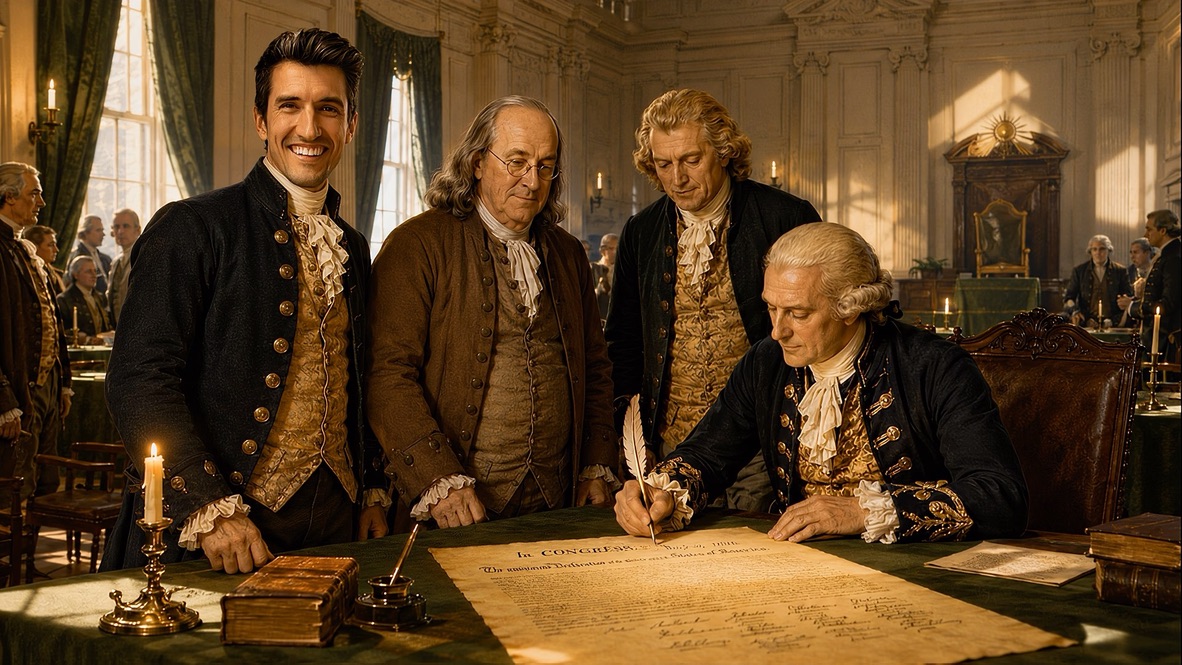
First, what a “Congress” even was
In 1775 there was no United States. There were thirteen colonies, each with its own government, its own money, its own accent, and mostly its own opinion of the other twelve. A Virginian and a Bostonian had about as much in common as a Texan and a Norwegian.
A “Continental Congress” was simply a meeting. Each colony sent a few men to Philadelphia to talk about what to do about Britain. Nobody elected them to run a country, because there was no country to run. They had no army, no treasury, and no legal authority to do anything at all.
They did it anyway. That’s the whole story.
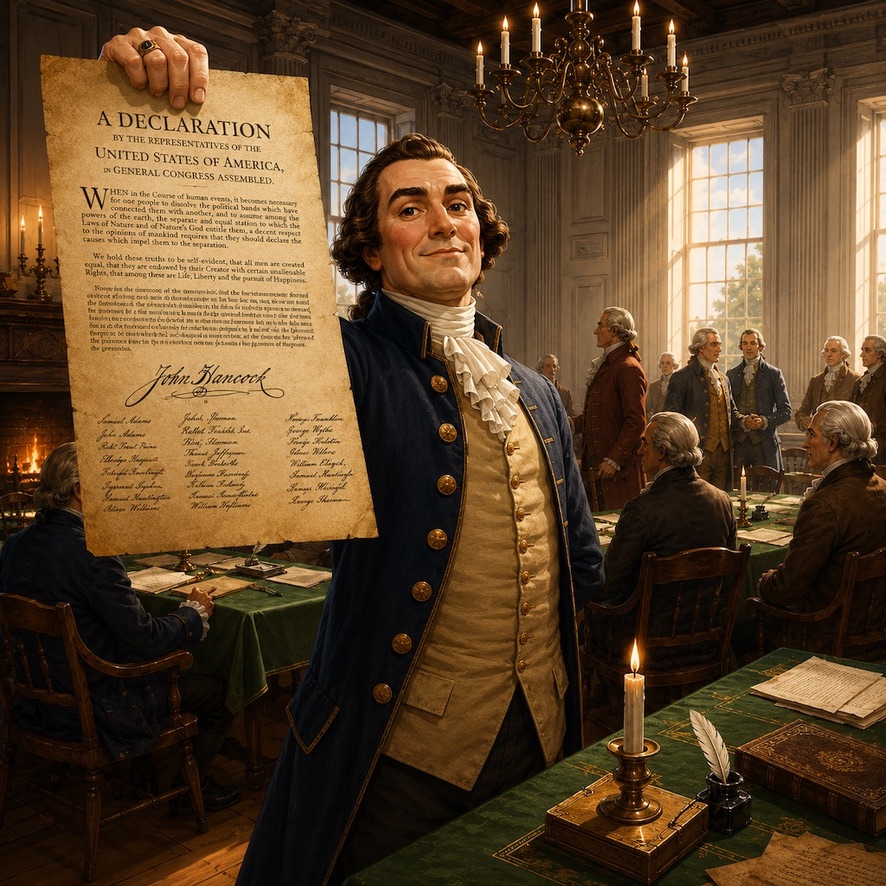
What had just happened
The Congress opened on May 10, 1775. Three weeks earlier, British soldiers and colonial militia had shot at each other at Lexington and Concord. People were dead. There was, at that moment, a ragged army of farmers sitting outside Boston with no supplies, no commander, and no plan.
So the delegates arrived in Philadelphia to a genuinely awful question: there is already a war — do we admit it?
The arguments (this is the good part)
Ask a child to imagine a room where everyone wants different things and nobody can leave. That was Independence Hall.
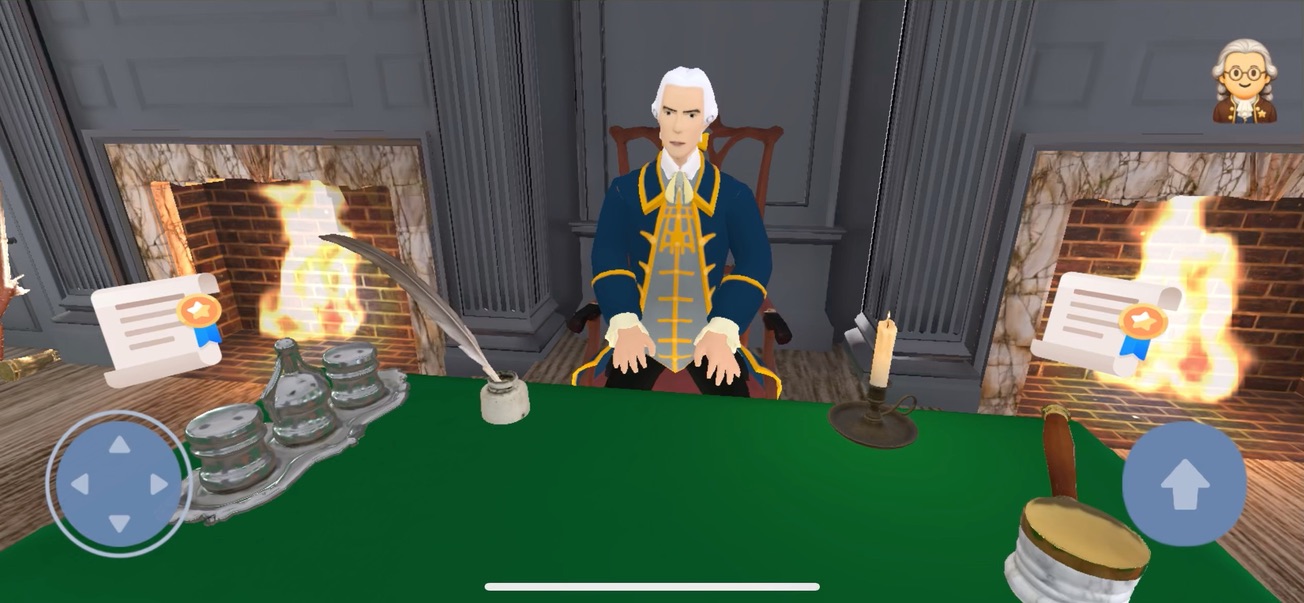
Group one wanted to make peace. John Dickinson of Pennsylvania led them. His argument was not cowardly — it was practical. Britain had the strongest navy on earth. The colonies had thirteen squabbling governments and a militia that ran out of gunpowder. Losing a war for independence meant losing everything, including the freedoms they already had.
Group two thought peace was already impossible. John Adams of Massachusetts led them. His argument: British soldiers had already fired on Americans. Pretending otherwise wasn’t peace, it was waiting.
Both sides were serious people. Both had families. Neither was obviously right.
What they actually did
Over about fourteen months, this Congress — with no legal power whatsoever — did the following:
- Created an army (June 1775). They adopted the men outside Boston as the Continental Army and needed a commander. Adams nominated a quiet Virginian who had worn his old military uniform to the meetings: George Washington. Choosing a southerner to lead a northern army was a deliberate move to hold the colonies together.
- Printed money they had no gold to back.
- Sent the Olive Branch Petition (July 1775) — a direct plea to King George III asking for peace. He refused to read it and declared the colonies in rebellion. That answer changed more minds than any speech.
- Argued through the spring of 1776, while a pamphlet called Common Sense sold enormously well and moved ordinary people toward independence faster than the delegates were moving.
- Voted for independence on July 2, 1776 — a vote John Adams was certain would be celebrated forever. (Americans celebrate the second, the fourth.)
- Adopted the Declaration of Independence on July 4, 1776, after editing Thomas Jefferson’s draft for two days while he sat there, miserable, watching them cut his words.
Why they were frightened
This is the detail worth telling your kids, because it makes everything else real.
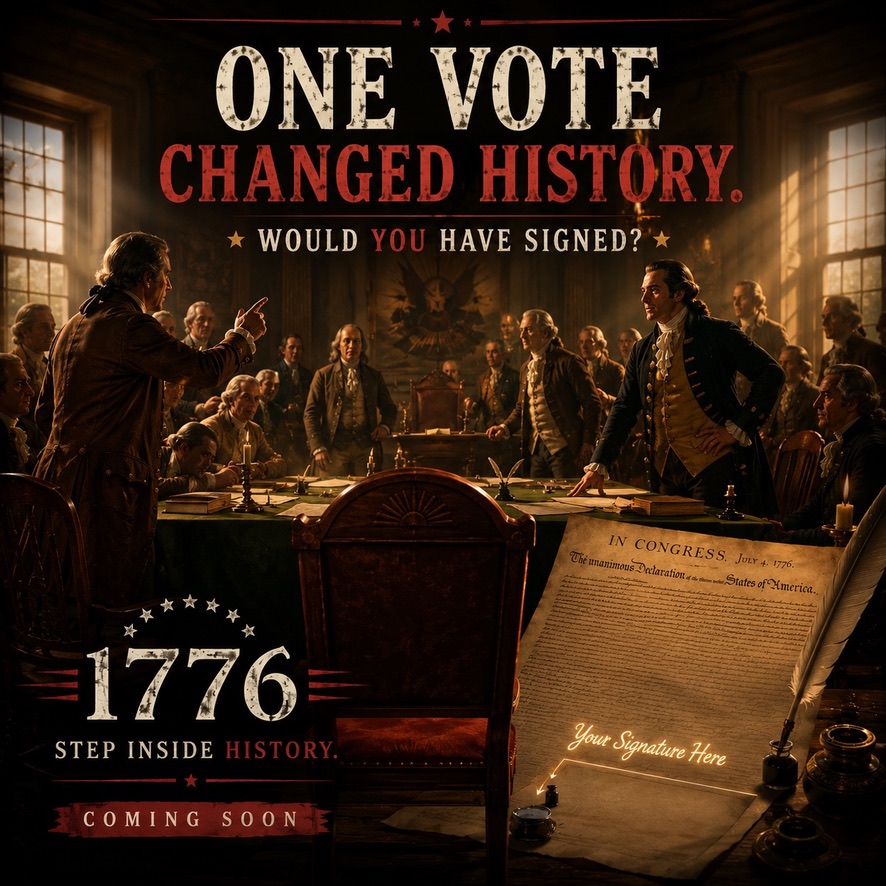
Signing that document was treason. Under British law the penalty for treason was death. These were not anonymous men — they signed their actual names, on paper, and sent it to a king with the largest army in the world.
Several of them lost their homes. Some lost their fortunes. A few lost sons. They knew that was the likely outcome and they signed in the summer heat of a closed-up Philadelphia room anyway, because they had decided the thing was worth more than they were.
How to explain it in one minute
If your child asks and you have sixty seconds:
“There was no America yet. A group of men from thirteen different places met in Philadelphia to decide whether to break away from England. They argued for more than a year, because breaking away meant war and probably dying. Then they voted yes, wrote down why — that’s the Declaration — and signed their real names to it.”
That’s it. That’s the Second Continental Congress.
Questions worth asking at the table
- If you thought your side would probably lose, would you still sign?
- Was John Dickinson wrong to want peace, or just careful?
- Why did they bother writing down their reasons instead of just declaring it?
- What would you have wanted changed in Jefferson’s draft?
The last question is the best one, because it turns a document kids are told to respect into a document they can argue with — which is exactly what the delegates did with it.
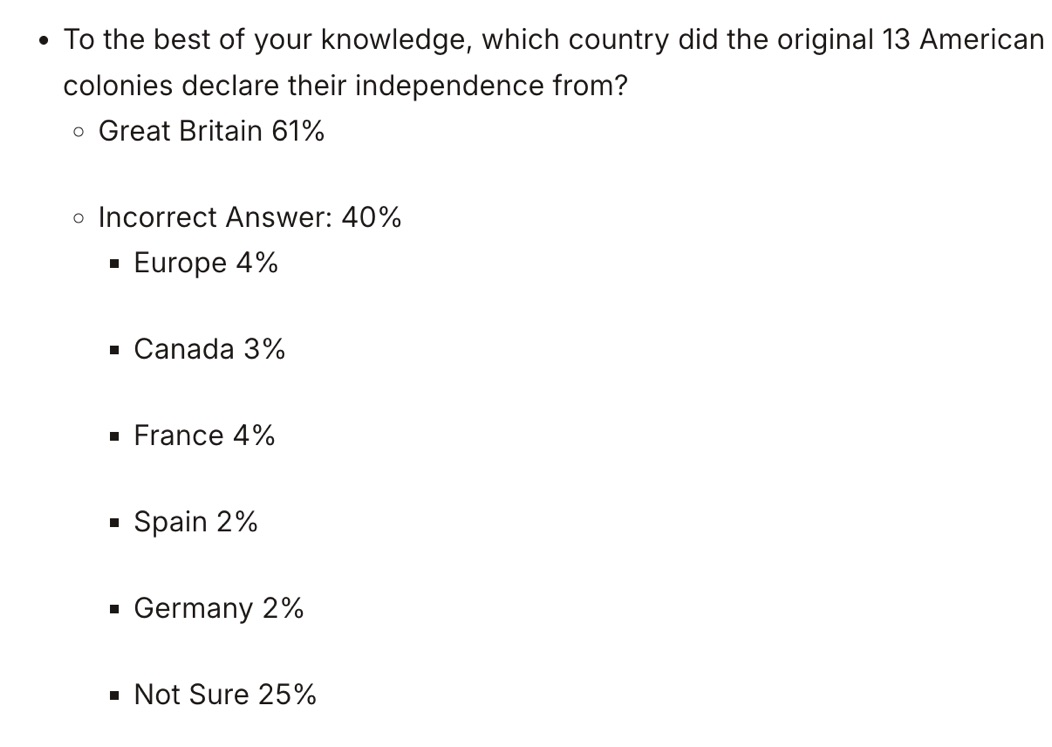
A note on how we teach this. Our app 1776 puts kids inside that room. They walk into Independence Hall, meet the delegates, work through the wording of the Declaration with Jefferson, and sign it themselves. The argument stops being a paragraph to memorize and becomes something that happened to people who were nervous about it.
It’s available on iPhone and Android — one $5 unlock, no subscription. See it here.