

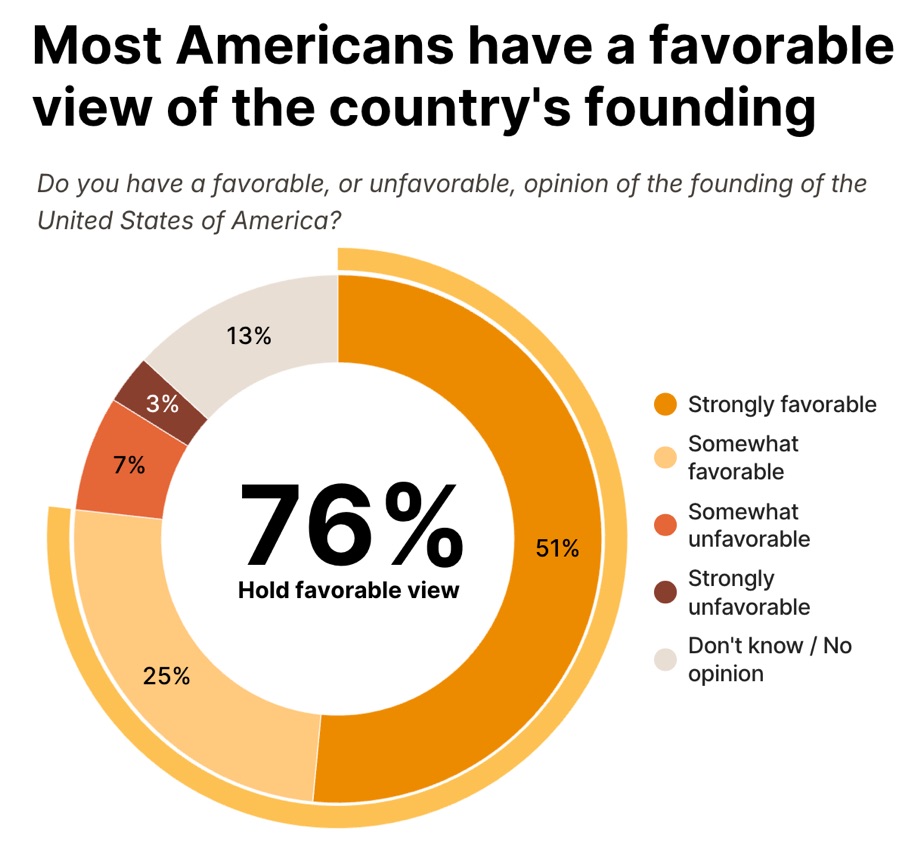
Every September, somewhere around the tenth, a version of this email goes out in most American school districts: reminder — Constitution Day is the 17th, please plan something. Then everyone goes looking for what “something” means.
It’s a real federal requirement, it’s less demanding than most people assume, and it’s very often met with whatever a teacher can assemble the week before. Here’s the actual shape of it.
What the law says
The requirement comes from a 2004 federal appropriations provision, usually called the Constitution Day amendment. It works like this:
- Who it applies to: every educational institution that receives federal funds. In practice that’s public districts, most charters, and colleges and universities. It’s tied to federal funding, not to school type.
- What’s required: an educational program on the United States Constitution, held for the students it serves.
- When: September 17, the anniversary of the signing in 1787. When the 17th falls on a weekend or holiday, schools observe it during the adjacent week.
The same provision also renamed the observance Constitution and Citizenship Day, which is why you’ll see both names in official materials.
What the law does not say
This is the part worth knowing, because it’s where the anxiety comes from.
- No specified length. There’s no required number of minutes.
- No required curriculum. No approved list, no mandated text, no federal lesson plan you’re supposed to be using.
- No test, no reporting, no compliance filing. Nobody collects evidence afterward.
- It doesn’t have to be a whole-school assembly. A classroom-level program counts.
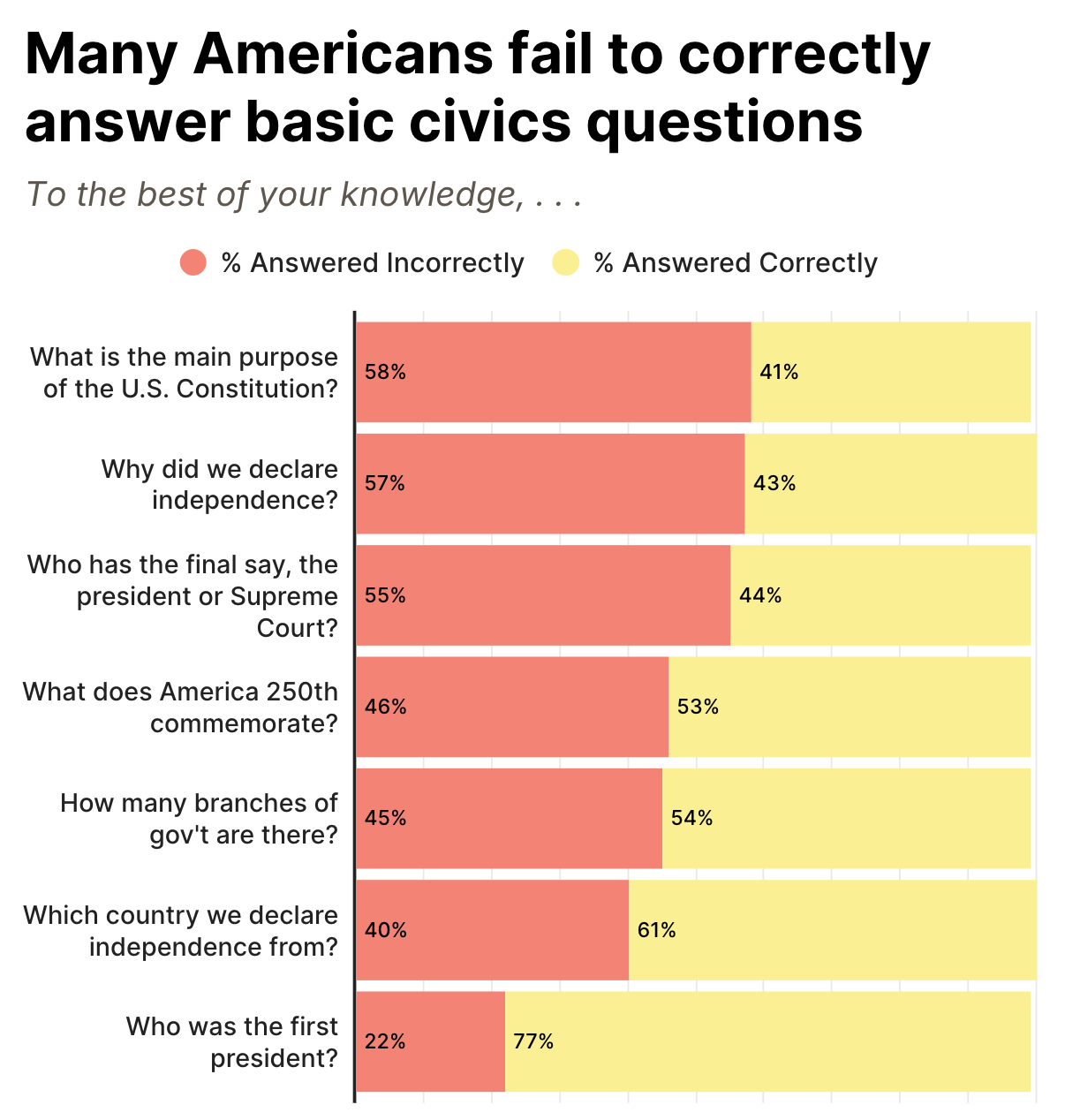
So the honest summary: schools are required to teach something real about the Constitution on that day, and they have wide latitude in how. The requirement is a floor, not a script.
Does it apply to homeschools?
Almost always no. The requirement follows federal funding, and a typical homeschooling family doesn’t receive any. Families enrolled in a publicly funded umbrella or charter program are the exception — worth a quick check with your program.
But plenty of homeschoolers mark the day anyway, for the same reason people bother with Pi Day: a date on the calendar is a useful excuse to teach something you meant to teach eventually.
What actually counts as a program
Any of these clears the bar, and the middle three take almost no prep:
- Read the Preamble aloud, together. Fifty-two words. Then unpack them one phrase at a time — what is a “more perfect Union,” and more perfect than what?
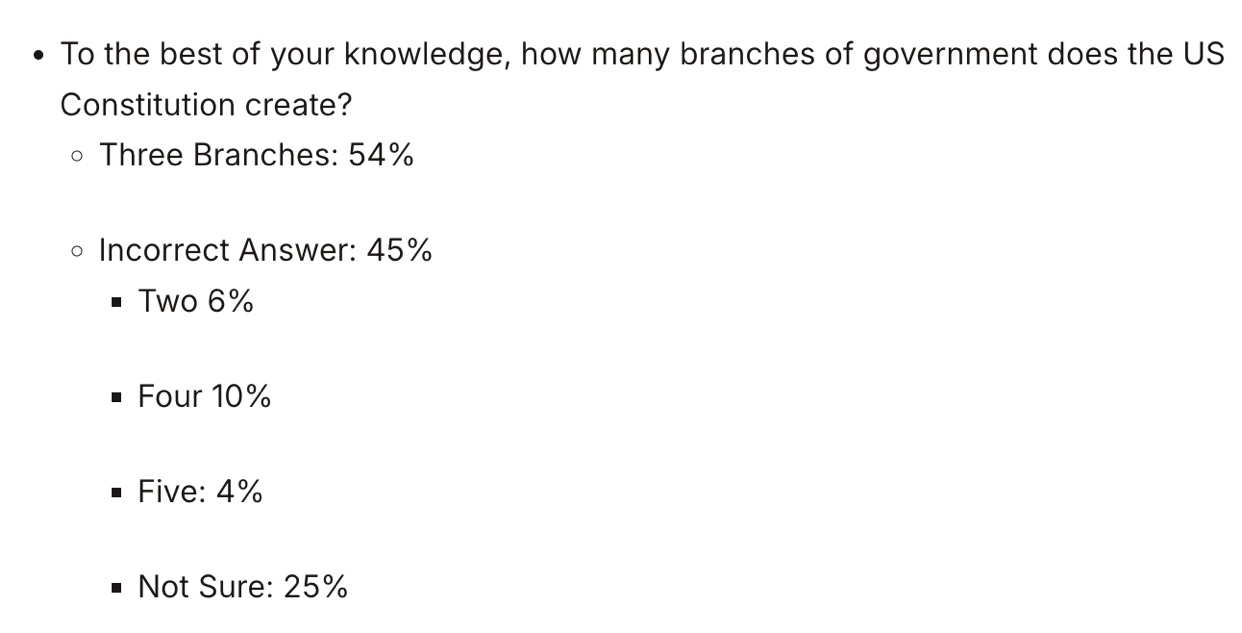
- Teach the three branches, and give kids a job to sort: who writes a law, who signs it, who decides if it’s fair.
- Read one amendment closely. The First is the usual pick. The Fourth lands surprisingly well with older kids.
- Hold a classroom constitutional convention. Give them a real dispute to settle — how rules get made, how they get changed — and let them argue. The arguments will rediscover the actual convention’s arguments faster than you’d expect.
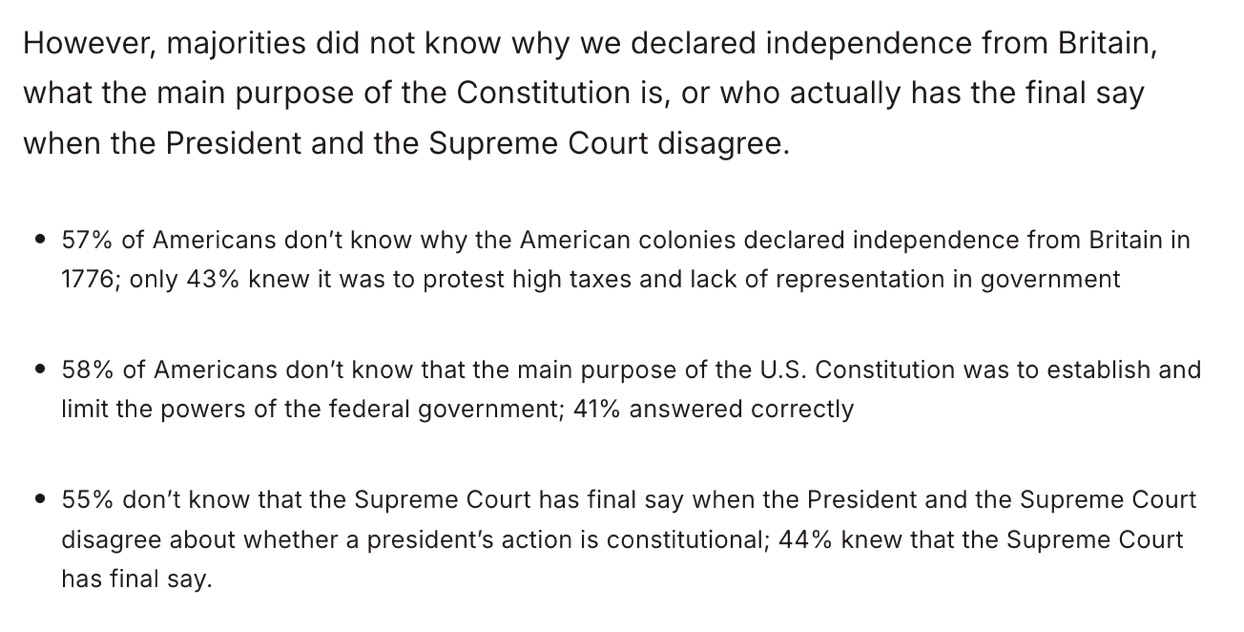
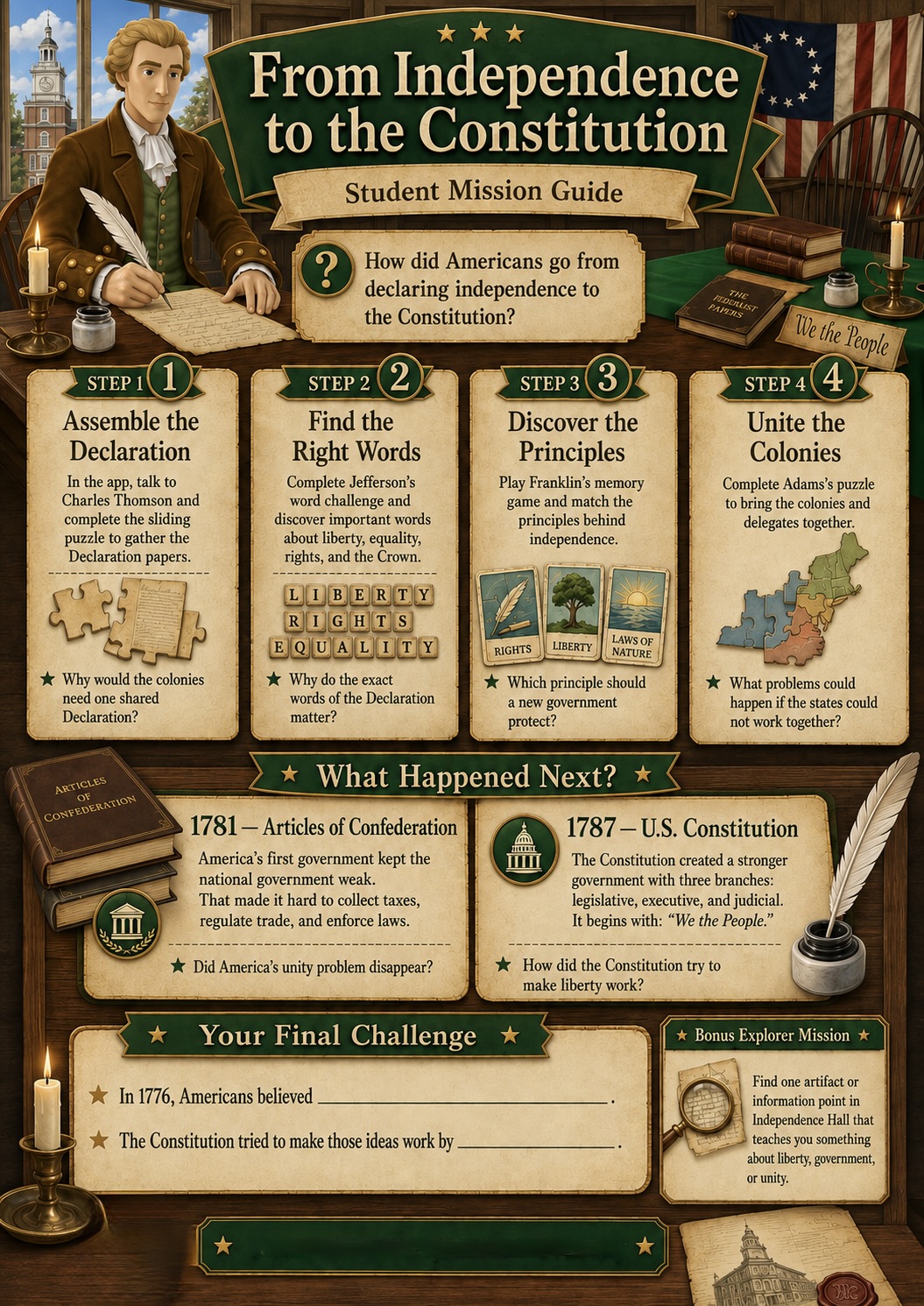
- Compare the Declaration and the Constitution. The Declaration says why; the Constitution says how. Most kids, and a lot of adults, have never had those separated cleanly.
- Look at the signatures. Thirty-nine men signed. Three delegates who were there refused. Asking why would someone refuse to sign? opens the whole Bill of Rights story.
The 30-minute version, if today got away from you
Read the Preamble. Ask what problem each phrase was trying to solve. Draw the three branches on a whiteboard and sort five jobs into them. Finish by asking: if you could add one amendment, what would it be, and who would it protect? Have them write it in one sentence.
That is a legitimate Constitution Day program, and it takes half an hour.
Why 2026 is a bigger year for this
This September lands inside the 250th anniversary year of the Declaration. The founding is already in the air, families are already asking about it, and the civic calendar keeps going after the 17th — the 250th of Washington’s crossing of the Delaware falls on December 26, and Princeton on January 3.
If you build something good for Constitution Day, you get to use it three more times before spring.
Where the app fits
In 1776, kids walk into Independence Hall, meet the delegates, work through the language of the founding with Jefferson, and sign the Declaration themselves. It covers the why — which is exactly the half that makes the Constitution’s how make sense a week later.
1776 is free to download on iPhone and iPad, with a one-time $5 unlock for the full experience. immersivehistory.com/1776
Classroom sponsorships for Constitution Day are handled through PERK Academy — a donor funds a classroom, the teacher pays nothing. Details at immersivehistory.com/1776.